Jenny and David are spending two months in New Zealand in early 2019. Jenny is working (mostly) while David will be cycling plus being tourists. Jenny is working most of the time but this blog mostly reflects their off-duty time! Work blogs can be found at https://nztrip.video.blog/transport-and-health-in-new-zealand/
Eglington valley is U-shaped because it is glacial, so also contains moraine.
Egllington river
Although it is very close to the west coast, Eglington River flows from these mountains down to the east coast.
There are 14 fjords in Fjordland. Each is called a sound,
but that is wrong. A sound is caused by water due to earthquake but these were
caused by glaciation, so are fjords.
Milford Sound
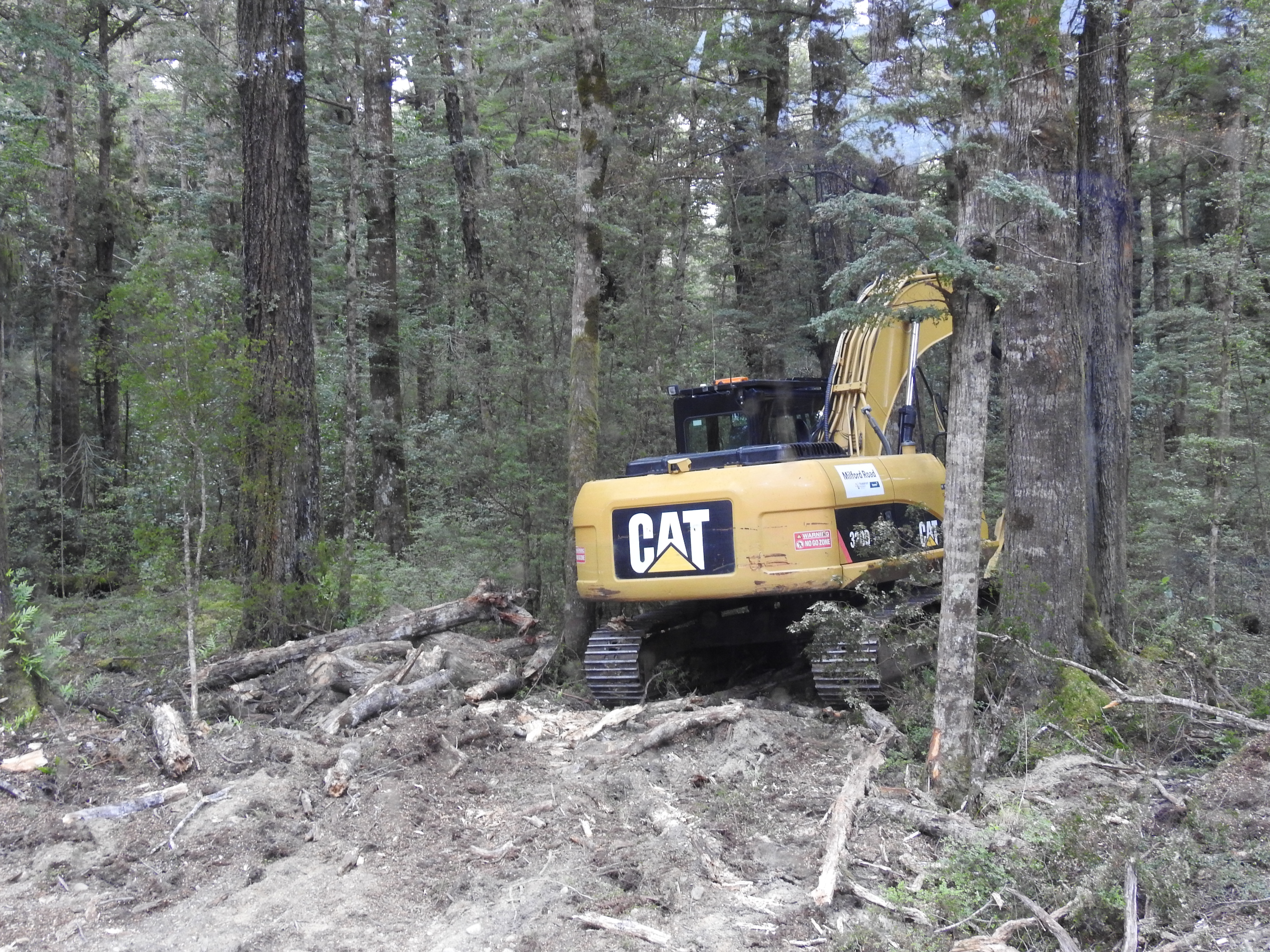
The NZ conservation authority is trying to remove the Douglas firs planted by miners for timber. When the trees shed their pine needles, it alters the acidity of the soil.
Day two of The Active Living and the Environment Symposium, continued
After a morning break for networking (and refreshments),
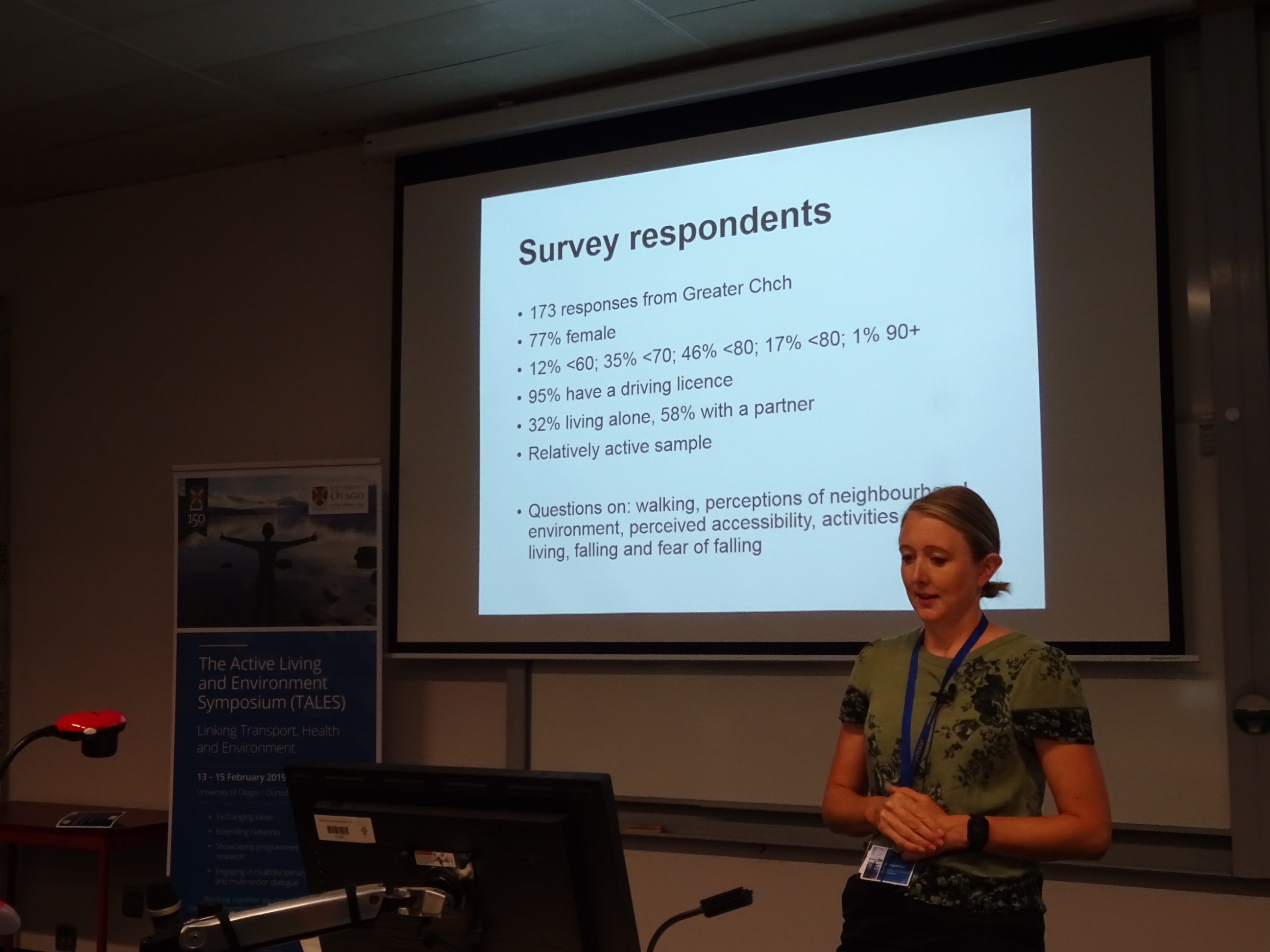
Rebecca Brookland, of the Dept of Preventive and Social Medicine at the
University of Otago in Dunedin, reported the results of her survey of older
drivers in New Zealand. She pointed out that there are now more older drivers –
and greater car use – than ever before but 51% of her survey participants had
walked for travel, 9% had cycled and 31% had used public transport in the
previous three months, despite New Zealand being such a car-dependent society.
Angela Curl
Continuing the theme of older people, Angela Curl reported their work on outdoor falls. These are common numerically, even if they are a small proportion of all falls in New Zealand. For example, she reported that ACC data showed 11,500 falls outdoors, compared with 260,000 falls indoors. More time spent walking increases the ‘opportunity’ to fall; fear of falling reduces the time spent walking. Thus the relationship is complicated. Older people are also scared of being hit by a bicycle on shared pathways (although it is actually a rare occurrence) but are more accepting of poor environments. Work by an Engineering Doctoral student at UCL on unsegregated shared use pathways has shown that the path width and the density of occupants – both walking and cycling – are the two most important factors in determining users’ comfort.
Victor Andrade spoke to us by electronic means, from Rio de
Janeiro. He described their team’s involvement with a company that wanted to
monitor and influence their employees’ commuting behaviours to improve
environmental sustainability, employee health, and social justice. Long Chen
described the various geographical information science (GIS) techniques he will
be using in his PhD to explore active travel to school.
Chris Button, opening a session on Facilitating Active Living,
spoke about teaching Water Skills for Life to children
in open water environments, where a greater range of competencies are required than
when learning to swim in a pool. Kimberley King told us about the proposed
Catalyst Project within the BEATS research programme. If funded, this project
would include roadshows and support the students from rural secondary schools
in Otago, New Zealand to conduct their own research projects and develop
innovative ways to encourage healthy behaviours in their schools and
communities. Kathleen Galvin and colleagues had found that physical activity
reduced the odds of men taking androgen deprivation therapy having sexual
dysfunction in their international study of men with prostate cancer. Kirsten
Coppell rounded off the session with a talk on findings from the BEATS
study on diet of adolescents in the Otago region, given that more
than one-third of adolescents in New Zealand are overweight or obese.
They found that adolescents in urban areas were more likely to consume junk
food more often than their peers in rural areas.
After a lunch spent networking, the fourth plenary session
started with Professor John Spence, from the University of Alberta, Canada,
speaking about autonomous vehicles (AVs) and their potential for
reducing active travel. He pointed out the essential biology of organisms has a
number of consequences we need to remember. We are programmed to conserve
energy and therefore minimise our physical activity levels. We therefore seek
energy efficiencies and love ‘progress
traps’.
Professor John Spence
The environment, such as food availability, shapes our physical
activity. Therefore exercise-based interventions are constrained by our biology
and are ineffective if the environment and structural factors are not
considered. He advocated having 24-hour movement guidelines that include sleep
and sedentary behaviour as well as physical activity. To be maintained,
physical activity must be FUN: fulfilling; useful
(active travel can save money and time); and/or necessary. He
referred to work by Milakis
et al and Crayton
and Meier. One advantage for many people of autonomous vehicles is
the value of travel time to do other things. There could also be fuel savings.
Proponents of AVs welcome the ability of those who can no longer drive to use
motor vehicles, and the ability of AVs to be involved in fewer crashes than
when people are driving, thus saving lives from road travel injuries. However,
the adverse consequences of the loss of physical activity could swamp the
health benefits. [JM to insert
photo of John Spence in the WordPress version]
Gareth Fairweather, now at the New Zealand Ministry of Transport, spoke about his work in London. As a former town planner there, Gareth had modelled the scenario of a predicted increase in London’s population to 10.8 million by 2041, needing 66,000 new homes for this projected growth plus the current backlog in housing, and a 23% increase of 5 million additional trips per day. He spoke about the importance of developing vibrant streets for a better public realm.
Gareth Fairweather
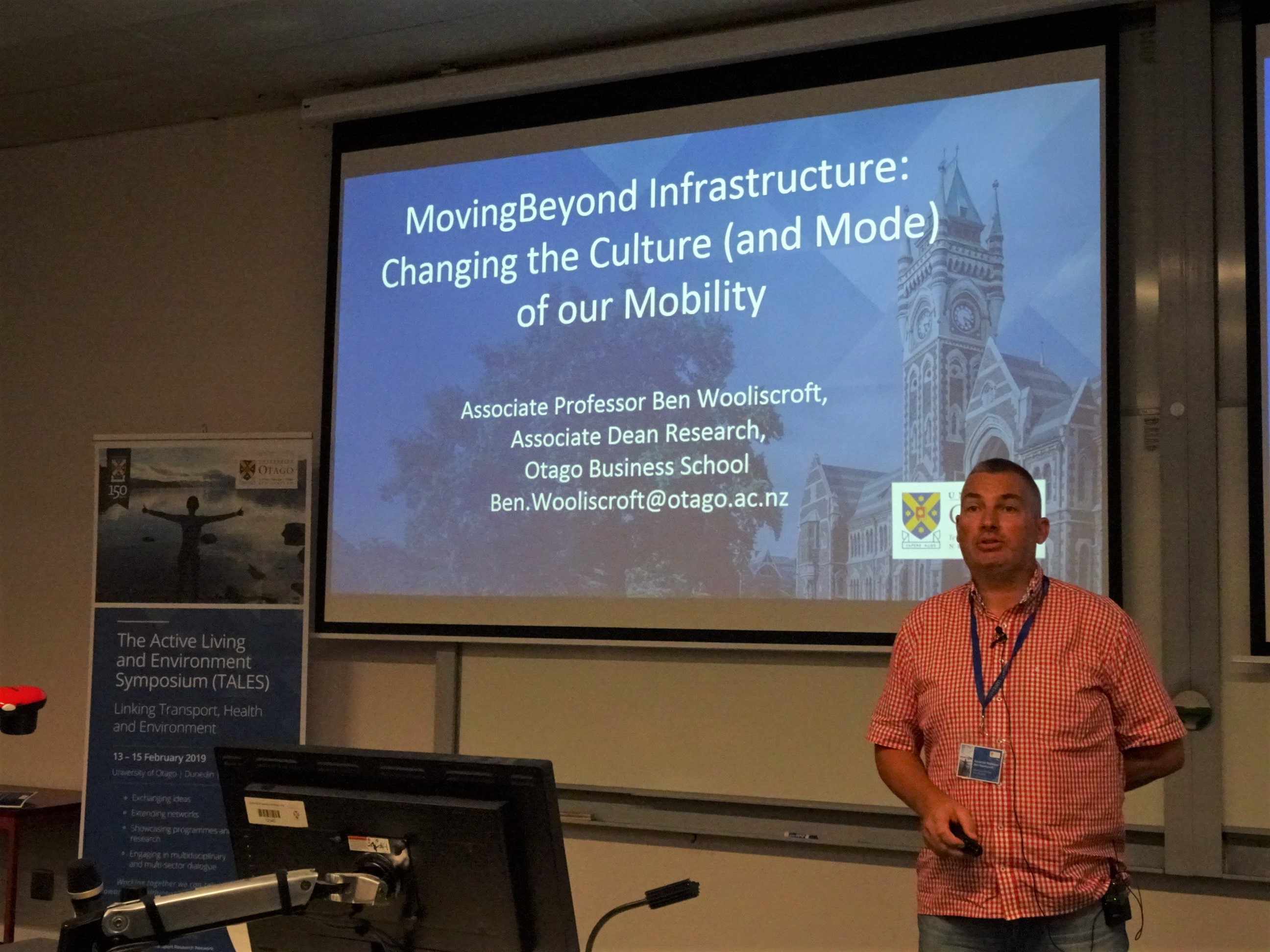
Ben Wooliscroft reiterated that New Zealand is dominated by a car culture. He spoke about ‘nudging’ – pushing people towards the path of least resistance without engaging the conscious. Supermarkets do it through the positioning of items in the store and on the shelves and checkouts. Major multinational food and drink brands promoting high-calorie, nutrient poor (junk) food and drinks do it all the time. He pointed out that mode shift is a wicked problem – one with no easy solution. There have been huge changes in travel modes over decades but roads have not changed much, in general. In the 1960s, Christchurch had the same mode share as the Netherlands.
Ben Wooliscroft
He also talked about the latent
demand problem and therefore the importance of bringing marketing
tools to bear on modal choice. Most research falls either into the area of
infrastructure research or of consumer decision research (for example material
culture, aspirations, social norms, and habits). He explained the importance of
the ‘messy’ cultural and societal bits inbetween these, such as enforcement,
the media, law, and stereotypes. He pointed out that cars and firearms have
similar energy levels but the legal responsibility is very different. He also
referred to the ‘hate-ism’ against bikes (often referred to as bikelash).
Infrastructure is necessary but insufficient for mode shift – and is not always
necessary if the culture is appropriate. For example, the approach in the
Netherlands of providing separate infrastructure for cycles and cars is now
changing back to shared use. We need to monitor and measure, understand, and
change much more than just the roads – a culture change is required.
These are brief comments on the talks and what I took form
them. Further information is available in the TALES Proceedings
booklet.
I will describe the debate the Future of Transport in a further blog. Watch this space!
Friday’s outrage has caused huge sadness across New Zealand. We went with our hosts for today to visit the Dunedin Mosque this afternoon, where about 200 people had gathered to show solidarity and sympathy. Children were drawing symobls and messages of peace and love on the pavement outside, while the Imam came out to speak to the crowd. A very sombre mood.
Postscript: Lutfer (Sandy’s Bangladeshi PhD student) says about 1,000 people came overall.
Please note that these various blogs are not in chronological order but are in the order that one of us has got round to writing it or to sorting out our photos! We went to Milford Sound on Monday 18th February – after Te Anau and a few days before Queenstown.
Up bright and early in the sunshine for our day trip to Milford Sound. The drizzle started as we left our room (Explorer Motel). Some of the mountains we had seen the previous evening were barely visible. We took the coach to Milford Sound so we could both see the scenery. David slept. As we left, there was a rainbow, but then the many-layered cloud cover prevented any sunshine.
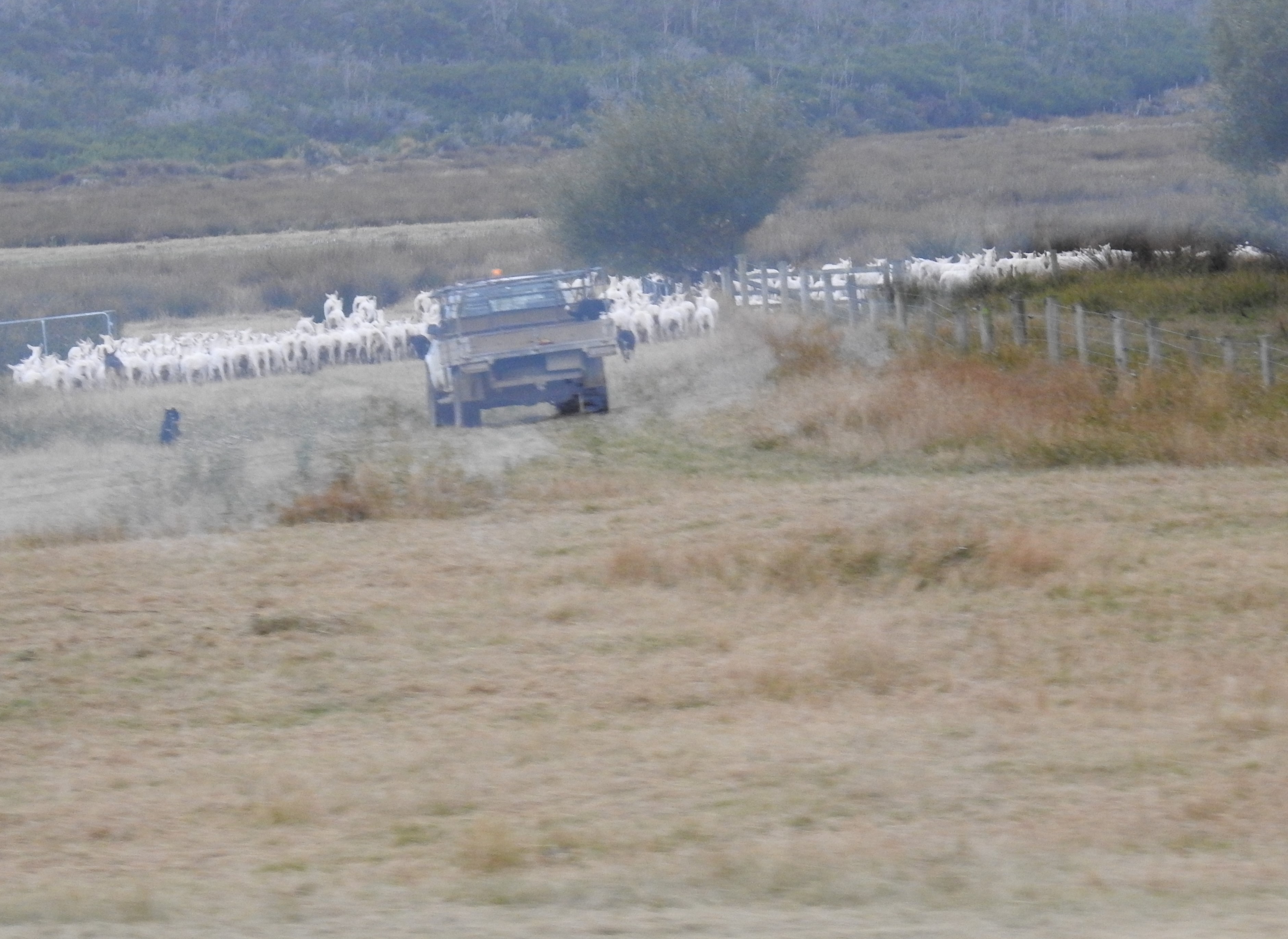
We passed Te Anau Downs, apparently the largest sheep farm in NZ.
We were driven along Milford Highway, through the Fjordland
National Park of beech forest. The trees grow on the rock (there’s no soil), as
their horizontal roots spread out and link up. Counterintuitively, the mountain
beech grows only low down, while the red beech and silver beech grow on the mountains.
The coach driver kept telling us how much more amazing the views are in the
rain because most of the waterfalls occur only when it rains…. This is lucky,
as it rains 200d per year, with an annual rainfall of 7m to 8m.
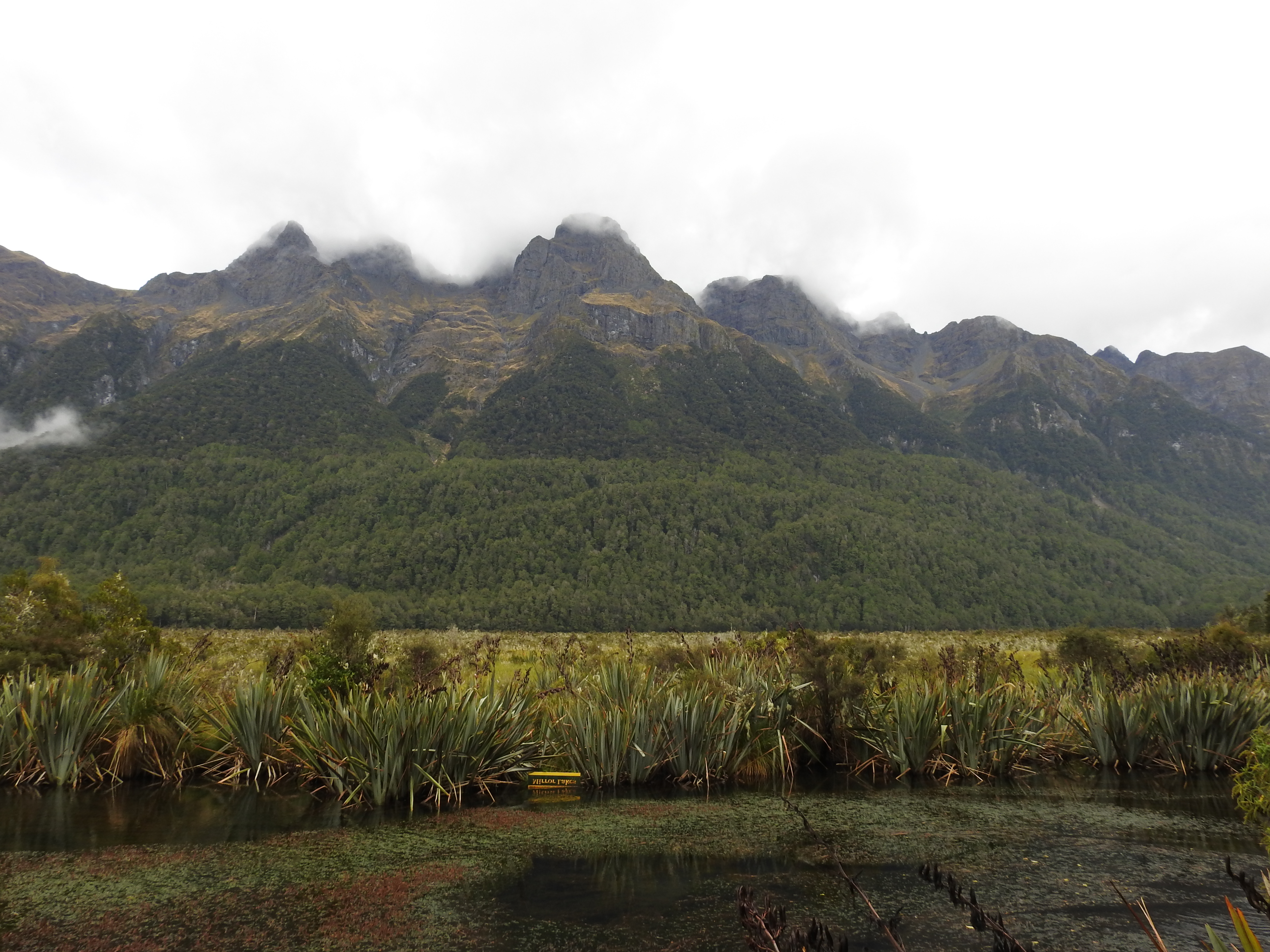
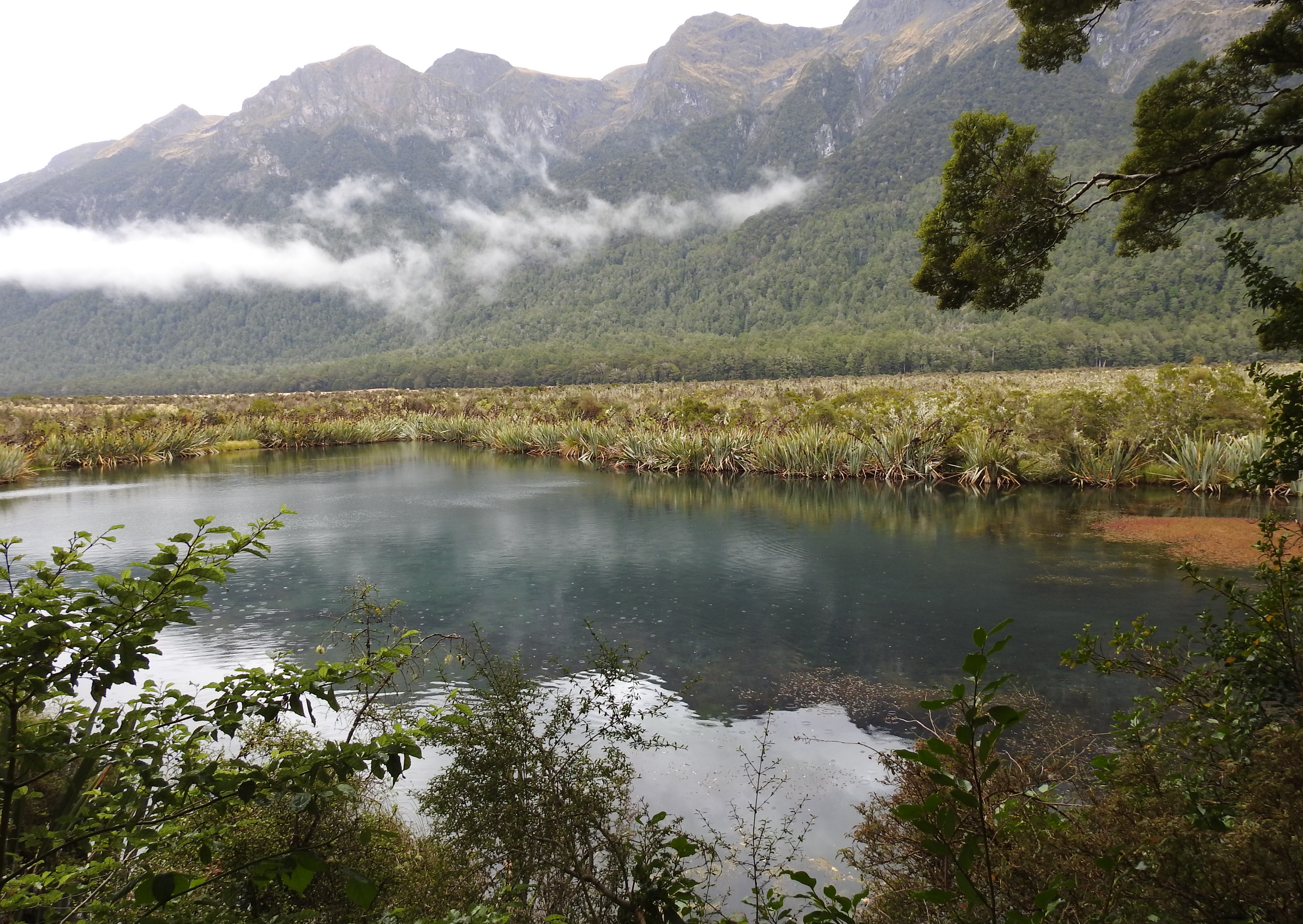
We stopped to see the Mirror Lakes, where the scenery is
mirrored perfectly in good weather. The photos look better than it did at the
time, bizarrely.
Mirror Lake
There were very few birds around, apart from some gulls, but
quite a few seals.
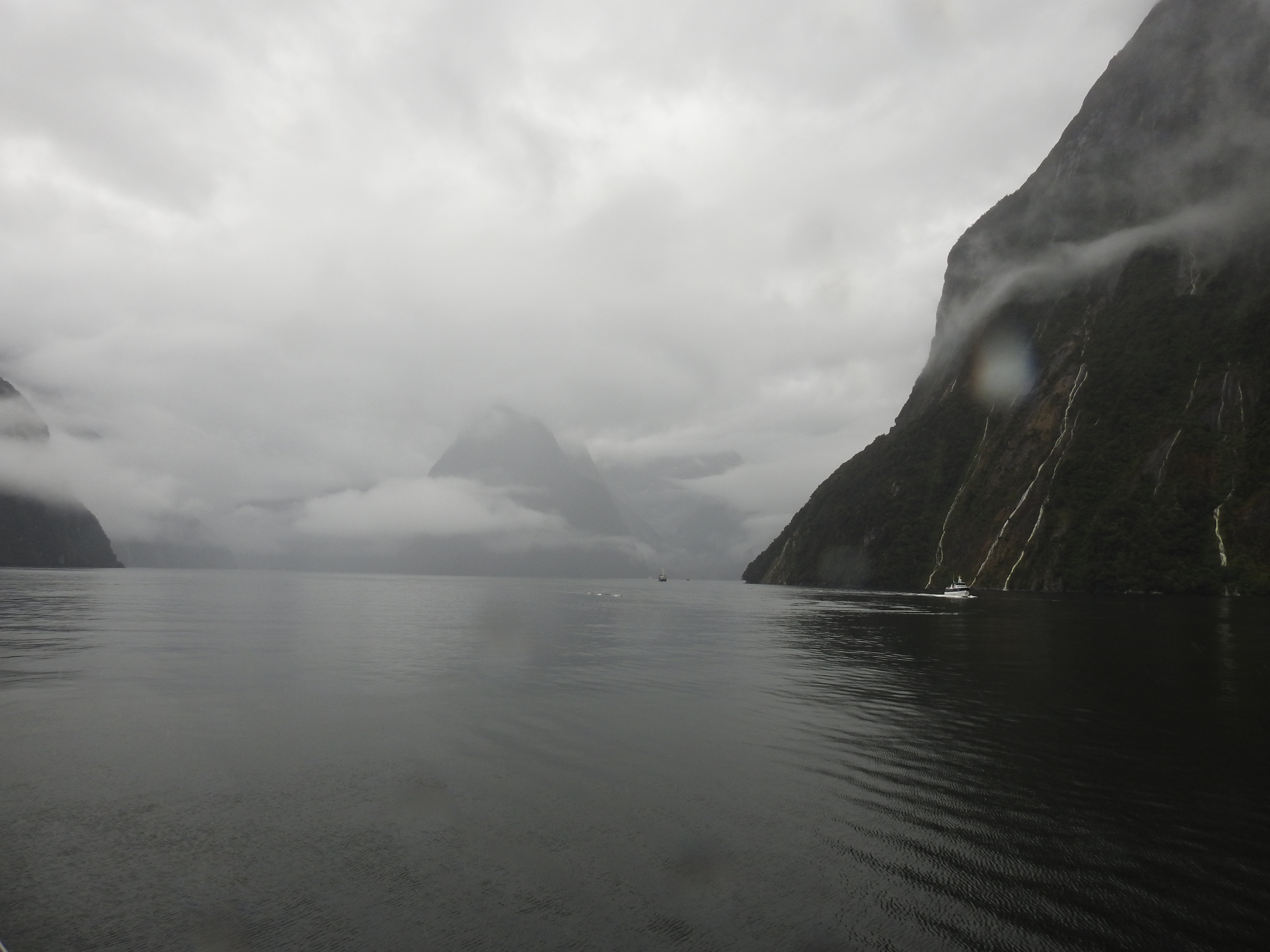
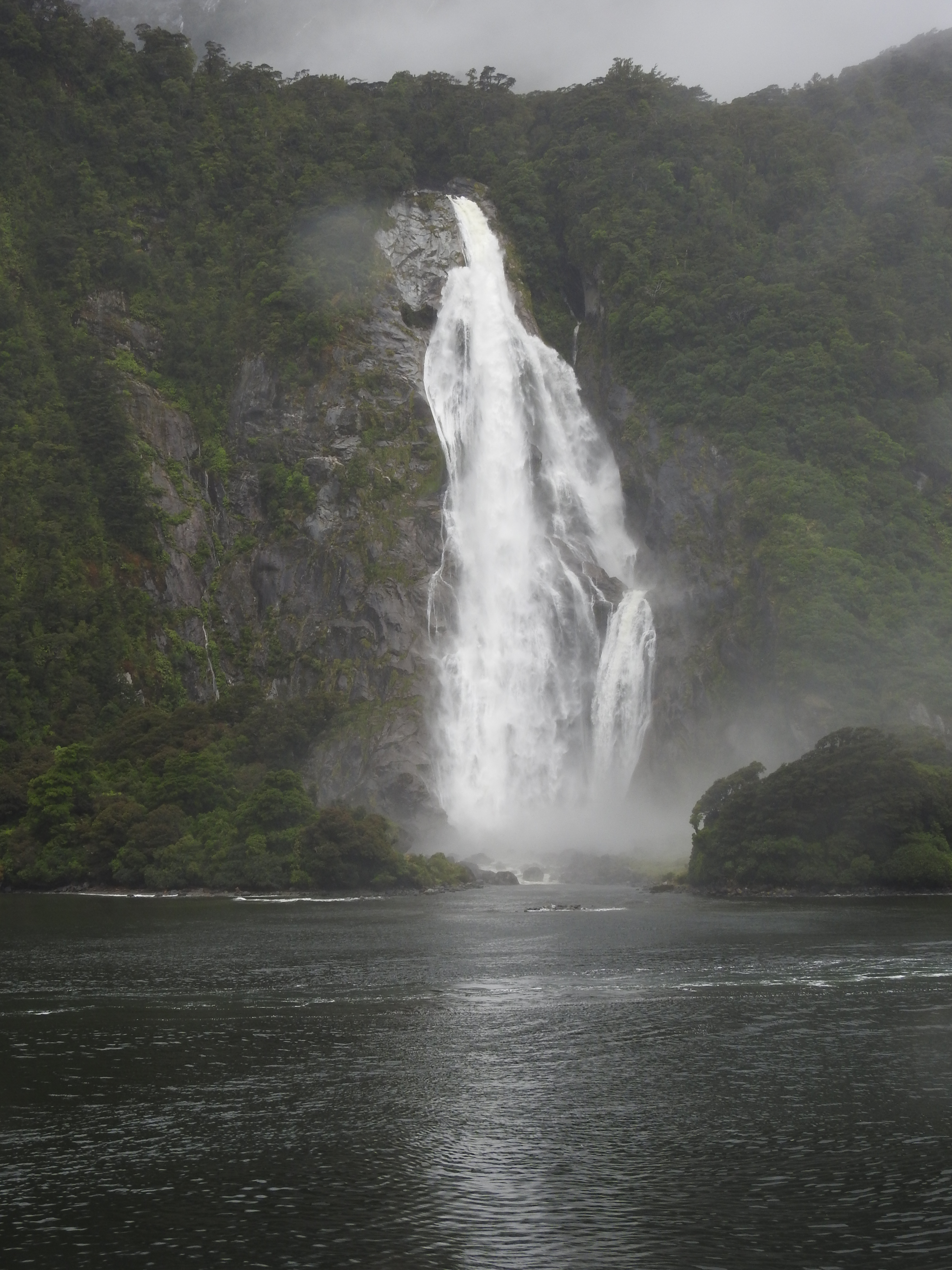
The more spectacular waterfalls are there every day but the hundreds of smaller waterfalls we saw were less usual, being temporary starting and stopping within minutes or a couple of hours of it raining.
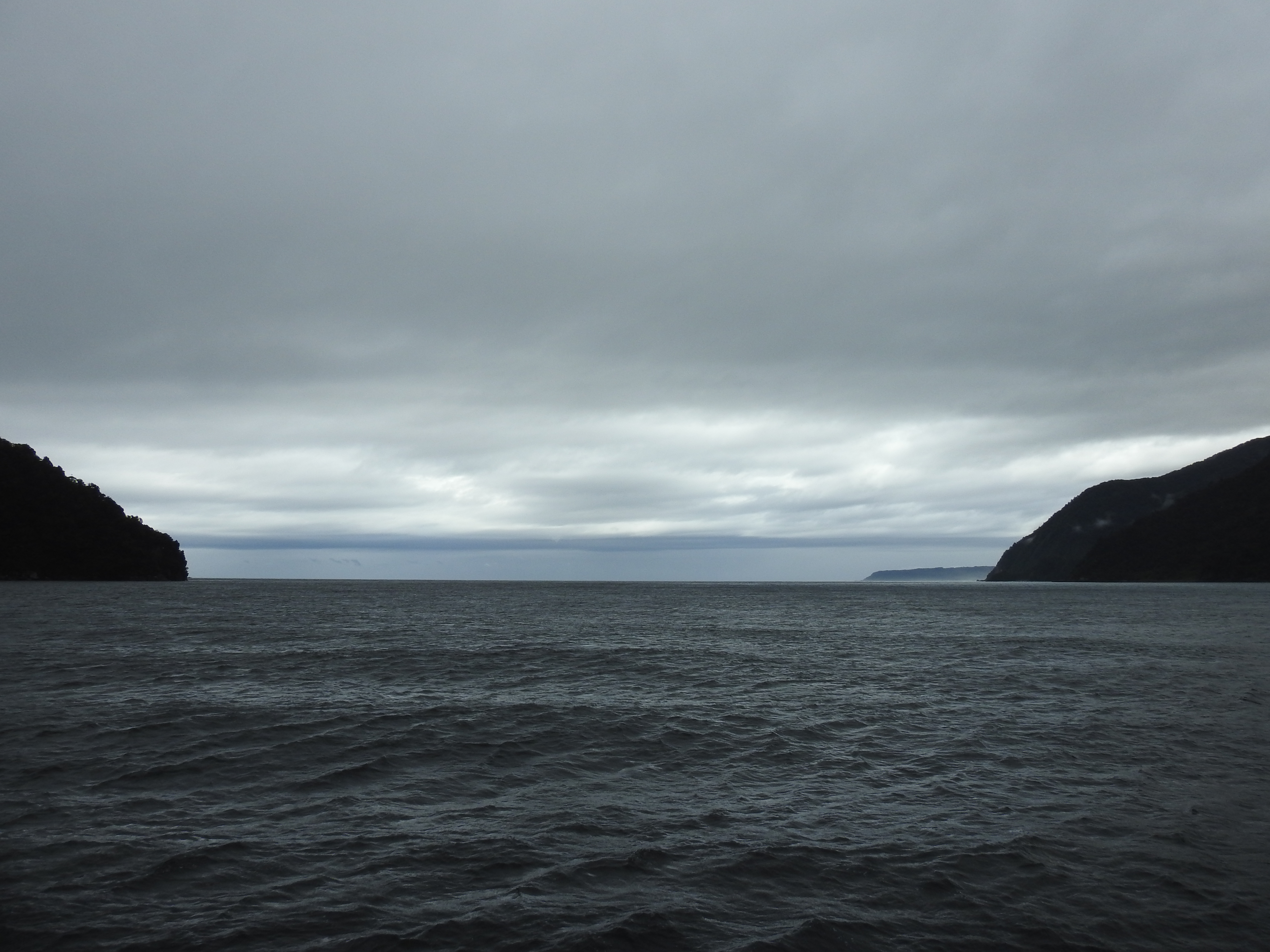
Judi, thanks for the advice to bring layers. We wore almost all of them! We cruised almost to the Tasman Sea, then returned.
Tasman Sea ahead
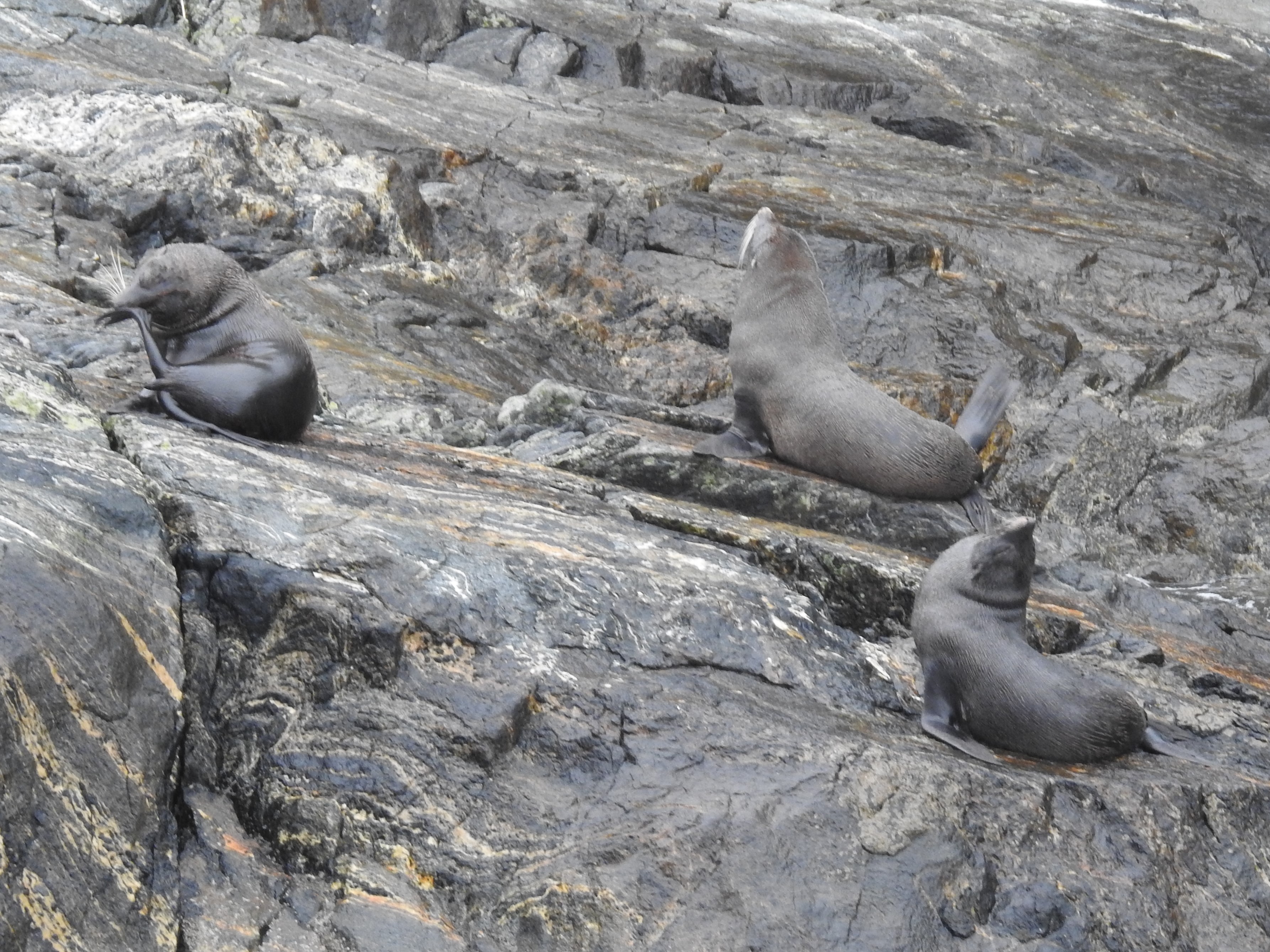
On the return voyage, we saw some sealions and the major waterfall en route to Milford Haven, then had the return coach trip back to Te Anau.
Sealions in Milford Sound
Before getting dressed, we had sprayed ourselves all over with the DEET that Judi and Ivor had brought back for us. One benefit of the almost incessant rain was that the notorious sandflies dislike getting wet more than we do!
Day two, third plenary session of The Active Living and the Environment
Symposium
Andrew Jackson
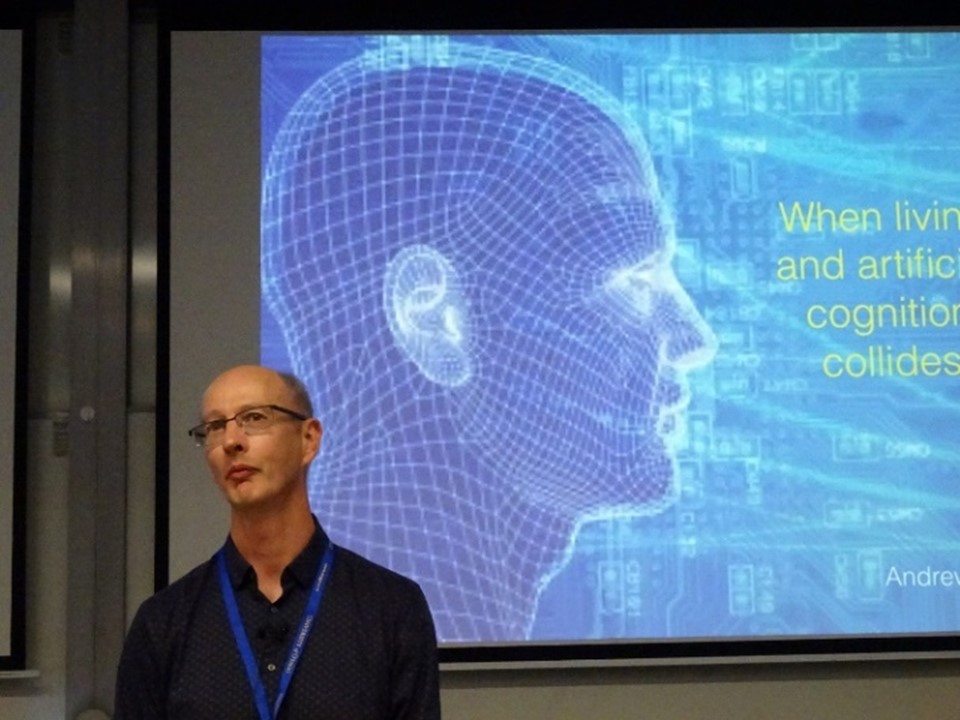
Andrew Jackson began the morning, telling us that people in New Zealand now walk only 9 minutes per day, on average, as car use has increased massively over time. Modelling had shown that public transport on demand (where the bus comes to you and drops you at your destination) would lead to a slight increase in deaths because of reduced physical activity.
Walking or cycling to and/or from public transport stops
contributes to physical activity levels, which is why some people include
public transport as ‘active travel’. It can even fulfil the weekly target
levels of moderate physical activity on its own.
Modelling an increase in active travel would lead to a
net 1,300 deaths prevented, because of the benefits of physical activity on
non-communicable diseases (even allowing for deaths due to road travel
injuries). In the model, use of autonomous vehicles would lead to an
additional 600 deaths because of the loss of active travel. The results
also depend on whether population growth forecasts are correct: if population
growth is high not medium (as now seems likely), carbon and air pollutant
emissions and other adverse consequences from motor vehicle use will be worse,
sooner. Radical change is thus needed to reduce carbon emissions. In Kuala
Lumpur, artificial intelligence (AI) is being used to control traffic lights.
Andrew painted a (to me) dystopian picture of our travel decisions being
controlled by AI.
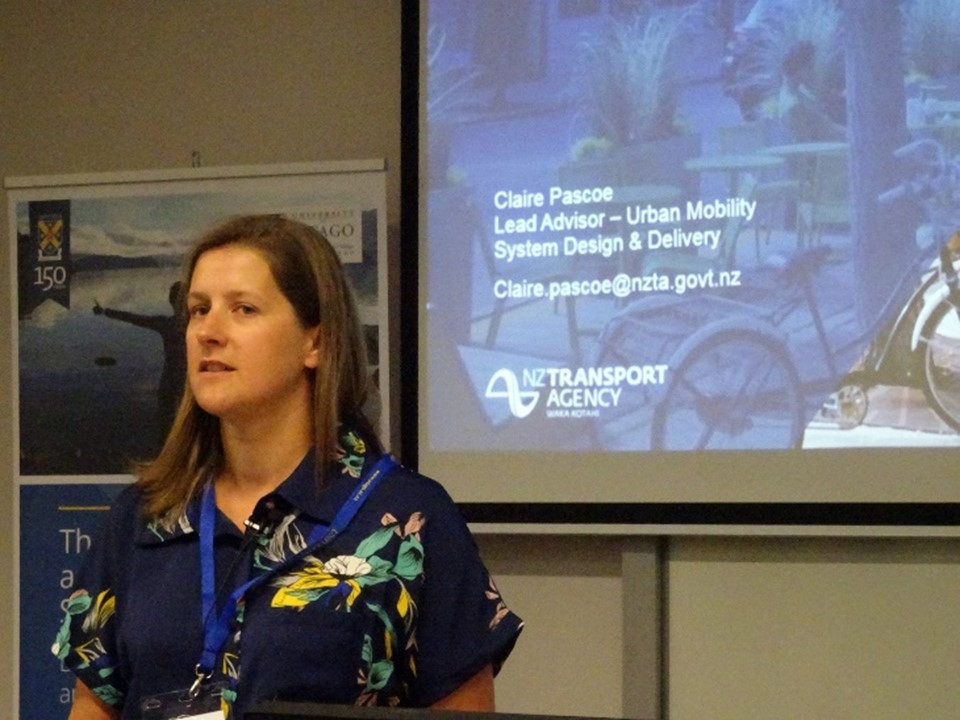
Claire Pascoe, from the New Zealand Transport Agency, introduced me to the concept of adaptive challenges vs technical problems and to the 2002 survival guide for leaders by Heifetz and Linsky. We are all familiar with technical challenges; the problems come (or don’t go away) when we try to deal with adaptive challenges as if they were technical problems. Adaptive challenges have a gap between aspiration (or people’s perceptions) and reality; involve stakeholders who cross boundaries; and have long timeframes (no ‘quick fixes’). The differences are summarised in this table.
Claire Pascoe
Relating this to the TALES theme, Claire proposed slowing
motor traffic and making car drivers feel that they are the guests on the road.
We need to frame the issue differently, changing the language to change
people’s attitudes (as was done for tobacco control – see summary
by Simon Chapman and Melanie Wakefield, and Simon Chapman and
Deborah Lupton’s book
on media advocacy.
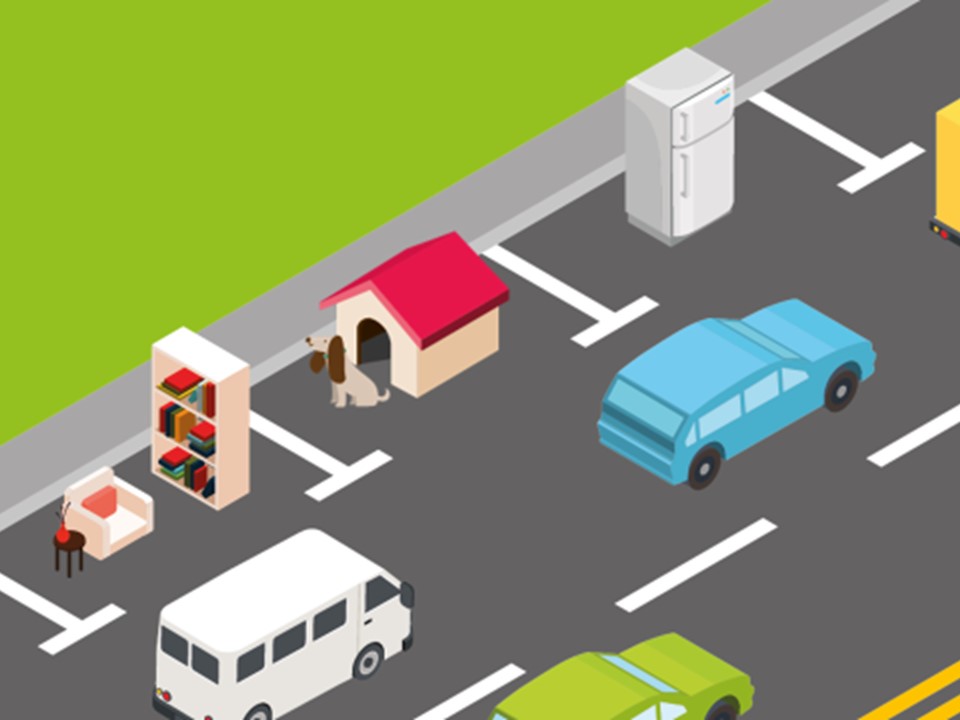
Claire pointed out how important it is for people to understand the losses from a car-based society. Her wonderful slide (reproduced below) made the very impactful point that storing private property on public roads is considered really weird – except for cars! Her third point related to ‘how ripe is the issue?’, i.e. has it become unacceptable? Referring to ‘For the love of cities’ by Peter Kageyama, she talked about the importance of love in the TALES context: if we have a strong emotional attachment to something, we look after it and are willing to suffer some pain to preserve it. In summary, cities should be dog-friendly, walkable, and cycleable.
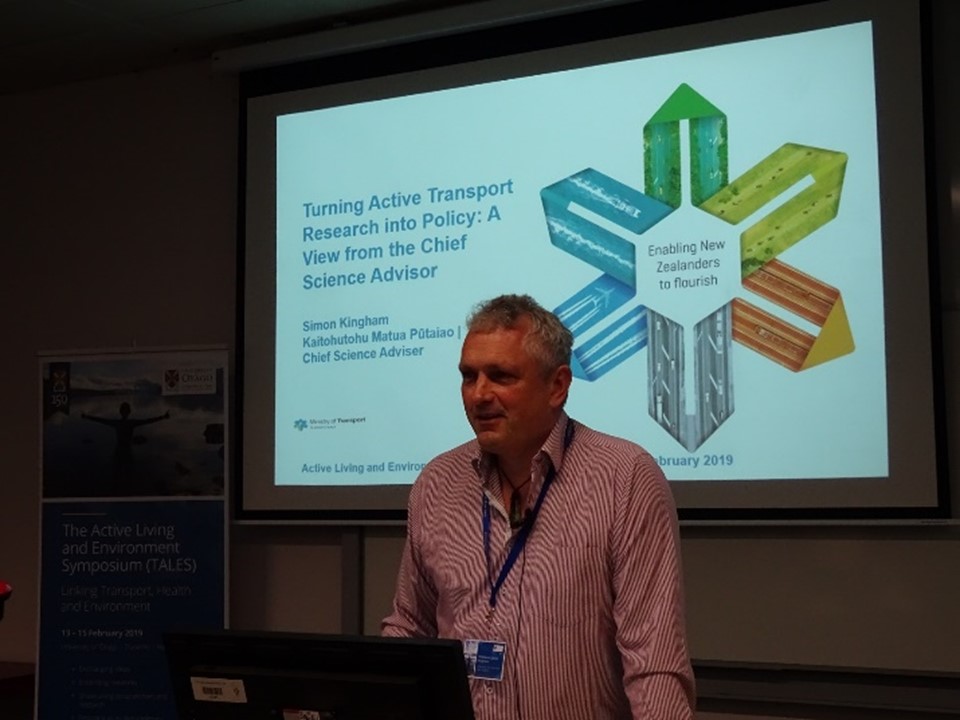
The final speaker in the session was Simon Kingham, in his
role as Chief Scientific Adviser to the New Zealand Ministry of Transport. He
alerted us to his lay summaries of research ‘Simon says’. I was
flattered to see that in Issue 7 of the Ministry of Transport Intelligence
Digest, he
recommended a recent article by a public health trainee and me.
It was heartening to hear that New Zealand Transport Agency
is committed to ‘a transport system that promotes wellbeing and liveability’.
Engagement is the key to success. Stakeholders need to be included at the stage
of project development plus ongoing involvement during the project – and it
needs to be genuine engagement (on both, or all, sides). Finally, when writing
up any research, policy implications need to be stated clearly.
I have tried – and failed – to create a separate page for my work-related Transport and health blogs. I was able to create one, but have not been able to add new blogs to that page, only to this main page. So people looking for reports of TALES will either need the very specific URLs or will need to scroll through my travel ramblings. Sorry!
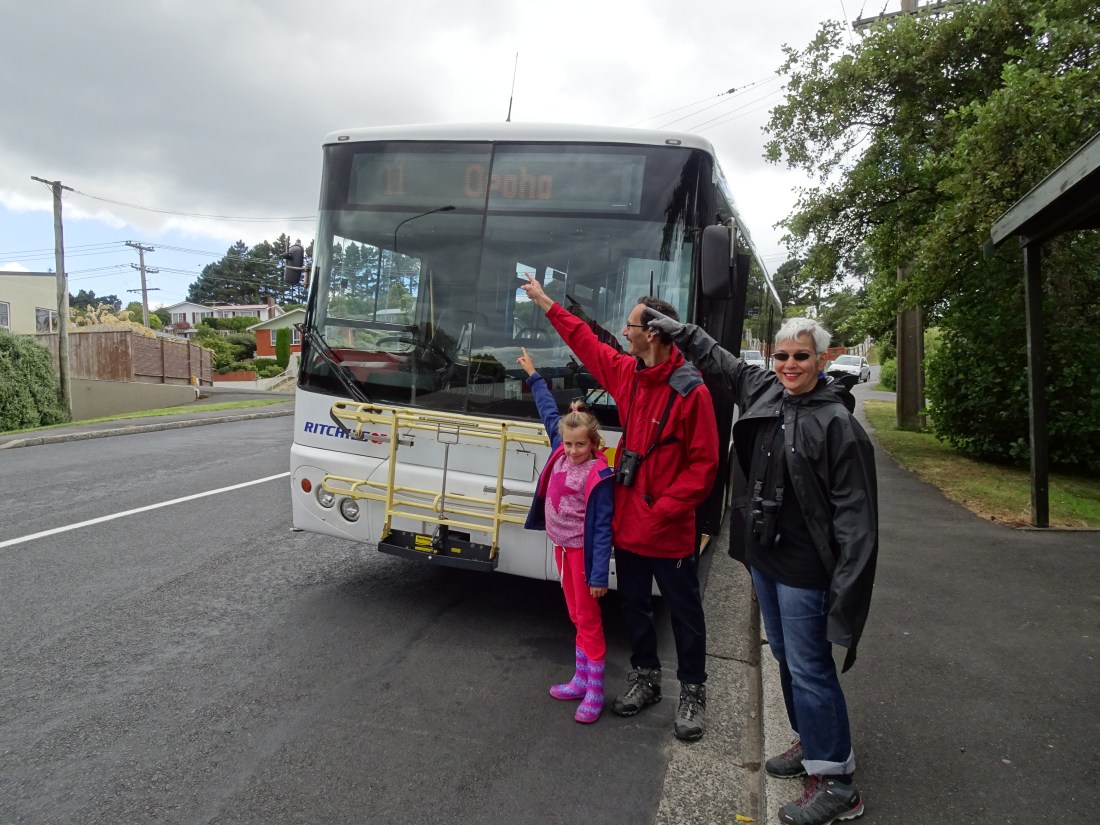
Dunedin buses – “Common courtesy”
For a Londoner, buses in New Zealand are strange in several ways.
Disadvantages, compared with London
There are very few routes and buses are very infrequent (just as in
much of the UK, outside London and a few other places). Presumably the
argument goes that so few people use the buses, it isn’t worth running
more. But if they were more frequent, and didn’t stop running so early,
more people would use them! If we go to salsa (which starts at 9pm in
Dunedin), we have to leave after an hour to catch the last bus back to
Maryhill – or get a taxi.
Some routes have one number when travelling in one direction, and an
adjacent number for the return journey. So the two buses that go to and
from Waverley are the 10 / 11 and the 19 / 20. If you don’t know that,
and the driver has forgotten to change it round, you miss your bus –
which is a greater inconvenience when they come only once every 30 or 60
minutes.
Ths bus times are approximate, so it behoves one to arrive at least 5
minutes if not 10min before the stated time, to avoid missing it.
Advantages
Every bus has a rack at the front (outside) that takes two bikes. The
only problem is you have to put it on without the driver’s help but it
is so low I expect I can manage. I may cycle to the university but if
it’s pouring or I’m too tired to tackle the very serious hills, I can
wimp out on the way home.
The bus driver waits for passengers to be seated before driving off!
Truly! The first time I took a bus, I walked towards the back, as usual,
leaving front seats for those less able to walk (but I have seen very
few of them on buses – maybe they don’t use buses or maybe they travel
at different times from me), took off my backpack, and realised we were
still stationary, so I sat down quickly and the bus then moved off. I
know I have grey hair and I was touched that the driver waited for me to
sit. Later in the journey I realised that he waited for each passenger
to sit down, not just the apparently old. This morning I was on an
almost empty bus and chatted with the driver. He was surprised when I
asked if it was company policy and training to wait for passengers to
sit down before driving off. “It’s common courtesy”, he replied.
“Dunedin isn’t like London: we have plenty of time.”
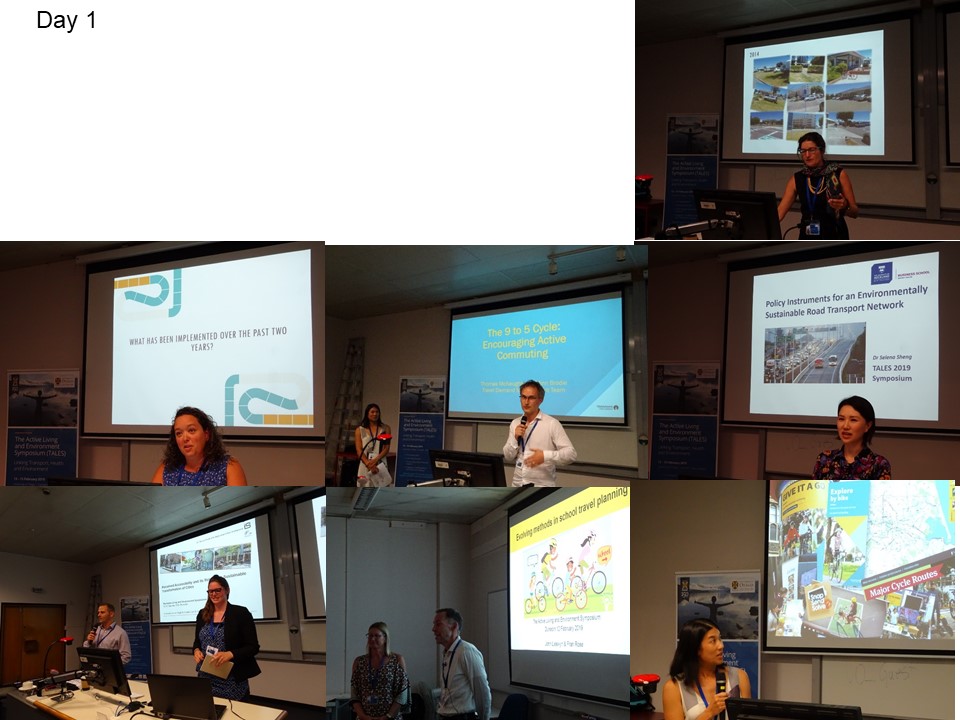
Day one of The Active Living and the Environment
Symposium, held at the University of Otago, Dunedin 13th to
15th February 2019 www.otago.ac.nz/active-living-2019
This was the second such symposium organised by Assoc Prof
Sandra Mandic (my host in Dunedin), who runs the BEATS Study (Built Environment
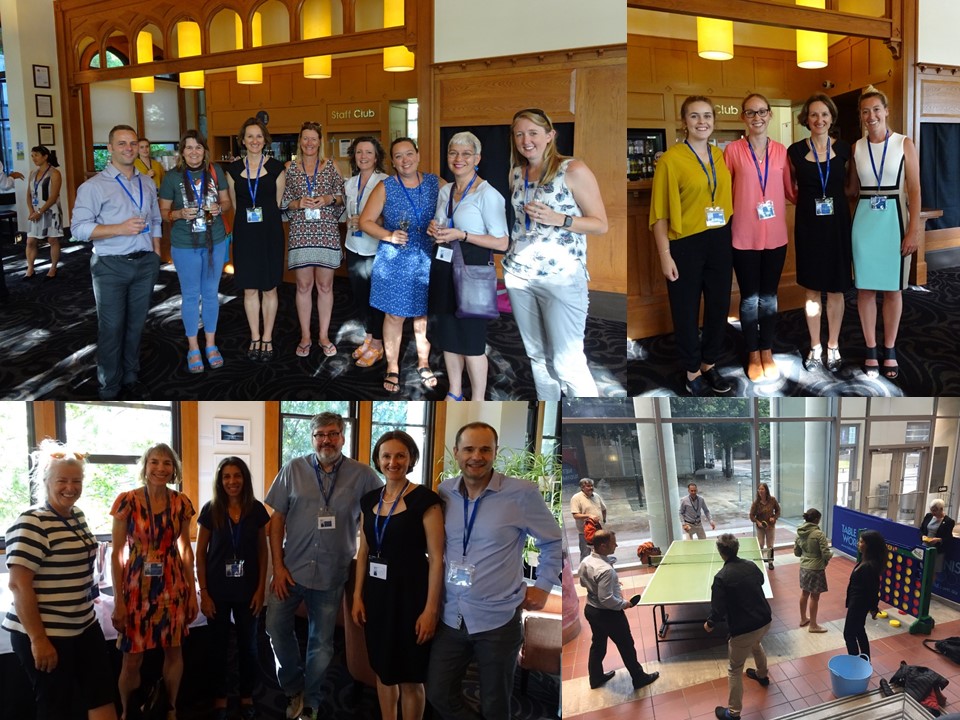
and Active Transport to School) in Otago, New Zealand. The 55 participants came
from across New Zealand (plus Canada, Germany, Ireland and the UK, as well as a
range of disciplines and professional backgrounds: local government politicians
(from across New Zealand); practitioners from the public sector and private
consultancies; government advisers; NGOs; academics; and students.
After a formal welcome from the Mayor of Dunedin, Mr Dave
Cull, including a traditional Māori welcome, Dr Hilary Phipps, Head of
Sustainability at the University of Otago outlined the many actions the
university is undertaking to improve environmental sustainability (https://www.otago.ac.nz/sustainability/).
University of Otago 2014 Travel Survey (to be repeated soon) found that the
weather, the hills, and safety concerns were cited as the main barriers to
active travel. Having now been in Dunedin for a few weeks, I understand these
concerns only too well! After a welcome from the university’s Pro-Vice Chancellor,
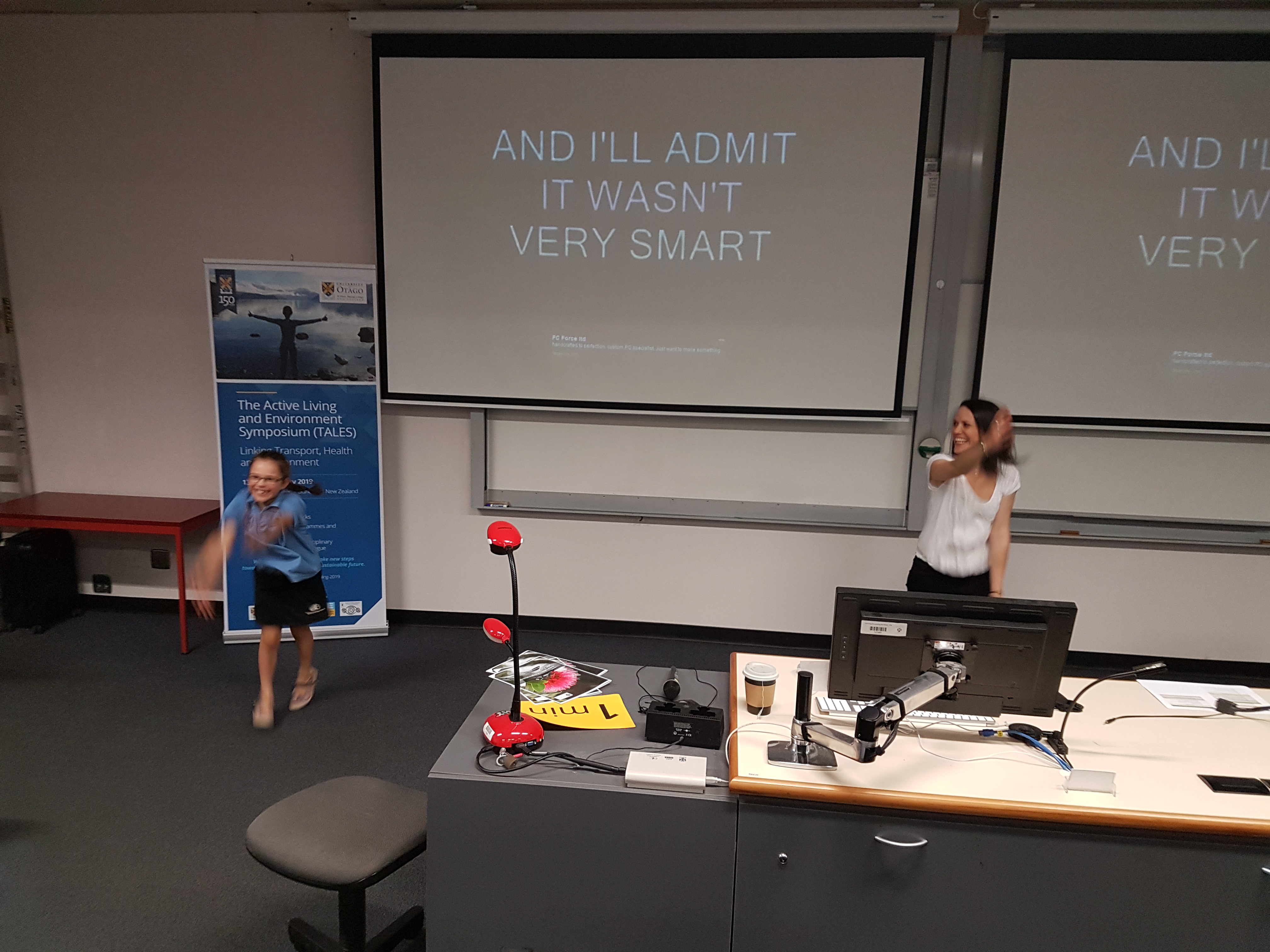
Prof Richard Barker, the audience were re- (or de-?) energised by joining in
with two dances led by local schoolchildren Sophie and Feidhlim, and assisted
by Sophie’s mum, Kim (one of Sandy’s research assistants).
They were a hard act to follow – and my Keynote Lecture was
the very next item! I spoke about community severance – the barrier effects of
busy roads for local people and our work at UCL to develop a toolkit to measure
severance (www.ucl.ac.uk/street-mobility).
All the toolkits I had taken with me were grabbed quickly, including by a
couple of the local government politicians and some practitioners. I look
forward to hearing from them if they actually used any of the toolkit, what
they found, and whether any actions resulted – useful for our ResearchFish
submission in March 2020 on the impact of our EPSRC/ESRC/AHRC funded research.
It was great for many of the attendees that some of the
presentations were updated results from studies that had initially been
presented at the symposium two years previously. One example was the TALES
organiser, Sandy Mandic, providing updates on results from the BEATS Study (Built
Environment and Active Transport to School www.otago.ac.nz/beats) in Otago –
but that will be a separate blog entry in a few weeks’ time.
Assoc Prof Melody Smith, from the University of Auckland,
spoke about the Neighbourhoods for Active Kids study https://kidsinthecity.ac.nz/?page_id=219.
This study has examined how children use neighbourhoods, and have related
measurement of children’s obesity and physical activity to aspects of the built
environment. Distance to school is an important factor when choosing travel
mode, so promoting connectivity (or pedestrian permeability), could be crucial
in promoting active travel. 50% of the Auckland parents who were interviewed
believed that transport safety was the main issue. The researchers noted that
two-thirds of schools had clustering of advertising of or outlets for unhealthy
products (mostly calorie-dense, nutrient-poor food and drink, I imagine). The
researchers had observed that children tend to go to places where there is
unhealthy advertising; I suspect that canny advertisers tend to buy marketing
space they know susceptible groups frequent.
The final plenary talk was from Dr Enrique García
Bengoechea, from the University of Limerick, Ireland. Enrique spoke about the
benefits of including participatory research at every stage of a research
project. Based on Cargo
and Mercer’s principles and recommendations for participatory research,
he described five elements: Reach, Effectiveness, Adoption, Implementation, and
Maintenance (RE-AIM) for an intervention to be scalable.
Two parallel sessions followed, after a networking afternoon
tea break. In the session on Policy and Workplaces, Anna-Lena van der Vlugt,
from Dortmund, Germany, reported on her work with Angela Curl and Dirk
Wittowsky on perceived accessibility. Their surveys in Hamburg, Germany, and
Nottingham, UK, found that safety after dark and satisfaction with public
transport were the two most important factors that affected perceptions of
accessibility. She discussed the influence of ‘fear points’ on how accessible
places actually are, taking into account people’s perceptions, and how this can
differ considerably to practitioners’ assessment of accessibility. And
congratulations to Angela Curl, a co-investigator of this work, on her new job,
as she leaves her lectureship post at the University of Canterbury and takes up
a senior lecturer post in public health at the University of Otago in
Christchurch in April 2019.
Selena (Mingyue) Sheng from the University of Auckland’s
Business School discussed policy instruments for an environmentally-sustainable
road transport network. She differentiated three types of sustainability –
environmental, economic, and social – and the importance of internalising the
externalities of congestion climate change, and injuries.
Lisa Malde (Hawke’s Bay District Health Board) and Louise
Baker (WSP Opus) spoke about the ‘Go
well’ travel plan to increase active commuting among staff and
reduce non-attendance for hospital appointments. More on-site facilities for
cyclists, encouragement for active travel, expanded free public transport for
patients and subsidised fares for staff ($0.99), a staff carpooling scheme,
introducing a staff car parking charge ($1/d), and provision
of travel information have increased bus use, cycling and walking
and reduced both driving and single-occupancy cars. All patients have to do to
avoid paying the bus fare is show their appointment card to the bus driver;
this also allows one accompanying person to travel for free.
The final presentation was from Christchurch City Council
staff about encouraging active commuting through its Central
City Travel Programme, as part of its post-earthquake redevelopment.
Their Travel Demand Management programme has been very effective, using a range
of approaches to complement each other. The built environment needs to
facilitate active travel, rather than causing barriers, but this is
insufficient. Affecting cultural and social norms; behaviour change approaches;
provision of information; advocacy; and political commitment and funding are
all required.
Travel Demand Management was also the subject of John
Lieswyn’s talk on school travel planning. He pointed out that the actual
process of developing a school travel plan can be the stimulus not only for
travel behaviour change but also for closer engagement and collaboration
between local government, school administrators, boards, and parents. It is
also an opportunity to improve road safety and funding for improved
infrastructure.
Jessica Calverley, a Masters student in the Active Living
Laboratory at the University of Otago in Dunedin, reported some findings from
the rural Otago arm of the BEATS Study. Of the adolescents living within 4.8km
from their school, 57% used only active modes for their commute and 31% only
motorised modes. Overall, they perceived that walking to school was safer, had
better social support, had fewer disadvantages, and also better infrastructure
than cycling to school, although almost all believed that both walking and
cycling to school were great ways to be physically active. Cycling was
perceived as having advantages over walking where distances were longer, the student
felt tired, or in cold/wet weather. A fellow student, Brittany White, compared
adolescents’ perceptions in rural settlements with small-to-medium urban areas.
Interestingly, the rural youth were less concerned about unsafe road crossings.
High traffic volumes and too many vehicles stopping or parking near schools
were more of a concern in the small-to-medium urban areas.
The final presentation was from Dr Aimee Ward from the
University of Otago, Dunedin. With her co-authors, she reported on skateboarding
as a form of active travel that is underrepresented in studies and reports. She
found that the 14 adolescents in the study who used skateboards for travel were
more physically active overall and had better wellbeing than those using any
other travel mode. However, their screen time was greater. She emphasised that
it is important to consider skateboarding when planning travel infrastructure
and policies.
In the second plenary session, Martin Dutton, from the
Ministry of Health, reported on New Zealand’s draft response to the World
Health Organization’s 2018 Global Action Plan on Physical Activity. The main
message will be to make the healthier choice the easier choice. Currently,
physical inactivity costs New Zealand $1.3bn annually. A government objective is to improve the
wellbeing of New Zealanders. A government priority is to increase social
wellbeing and connectedness. Which brought us nicely full circle at the end of
Day 1 of the TALES Symposium, as we had heard all day about the importance of
active travel in promoting wellbeing, social connections, and, of course,
physical activity. I wrote about the relevance of active travel to WHO goals in
my editorial
to volume 11 of the Journal of Transport and Health, December 2018.
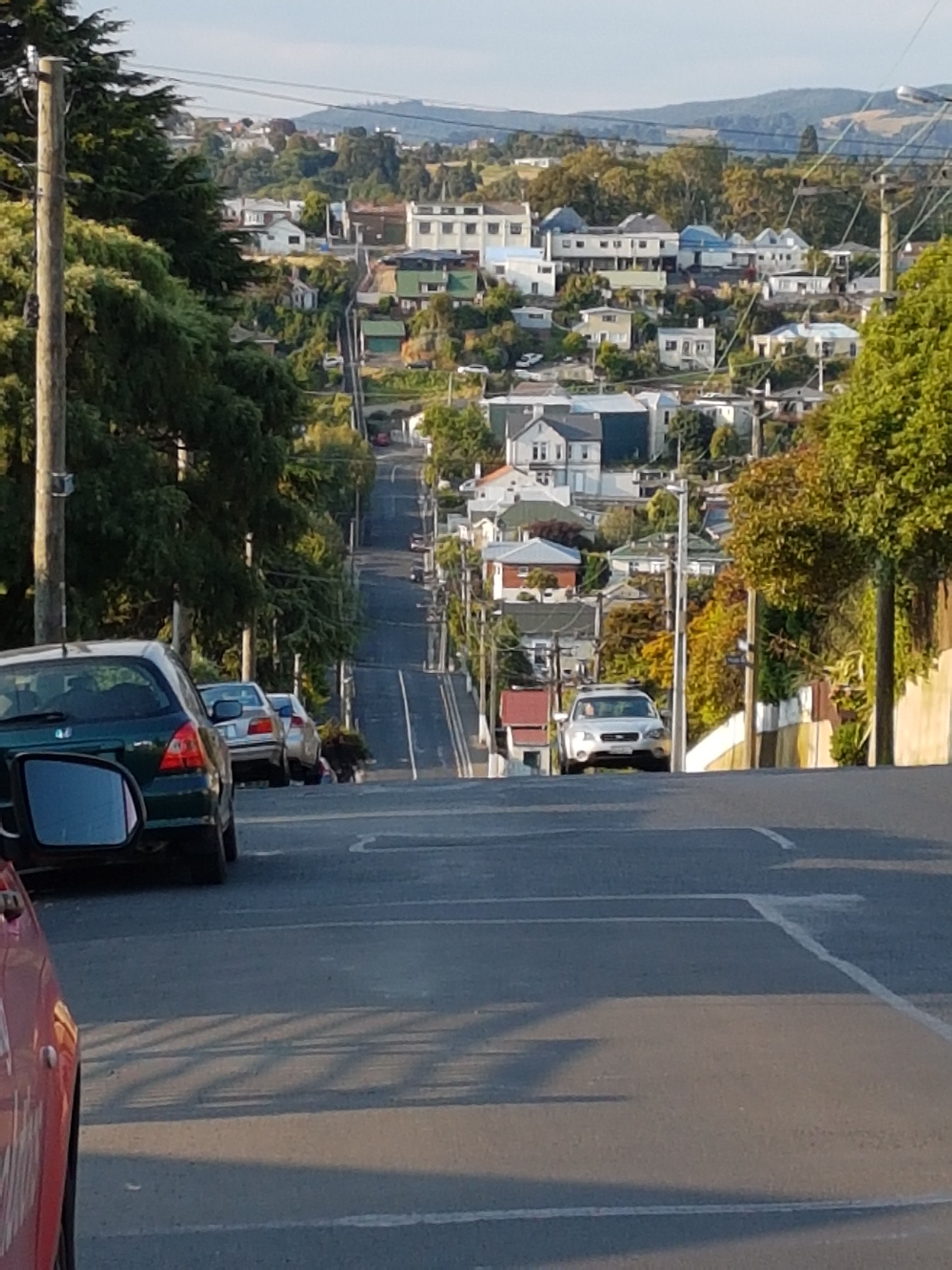
Yesterday we moved to the house we have rented for a month in Maryhill. The clue’s in the name: the road outside where I’m sitting is at about 30 degrees! I walked to the university this morning, by a longer but flatter route that includes a diversion to go along the top of this ridge. On the way back, I decided to go the more direct route. Glenpark Avenue, where we’re staying is a straight road – on a 2D map. However, the undulations are by no means ‘gentle’ (Norwood cyclists will understand).
Glenpark Avenue – ‘our’ road in Maryhill
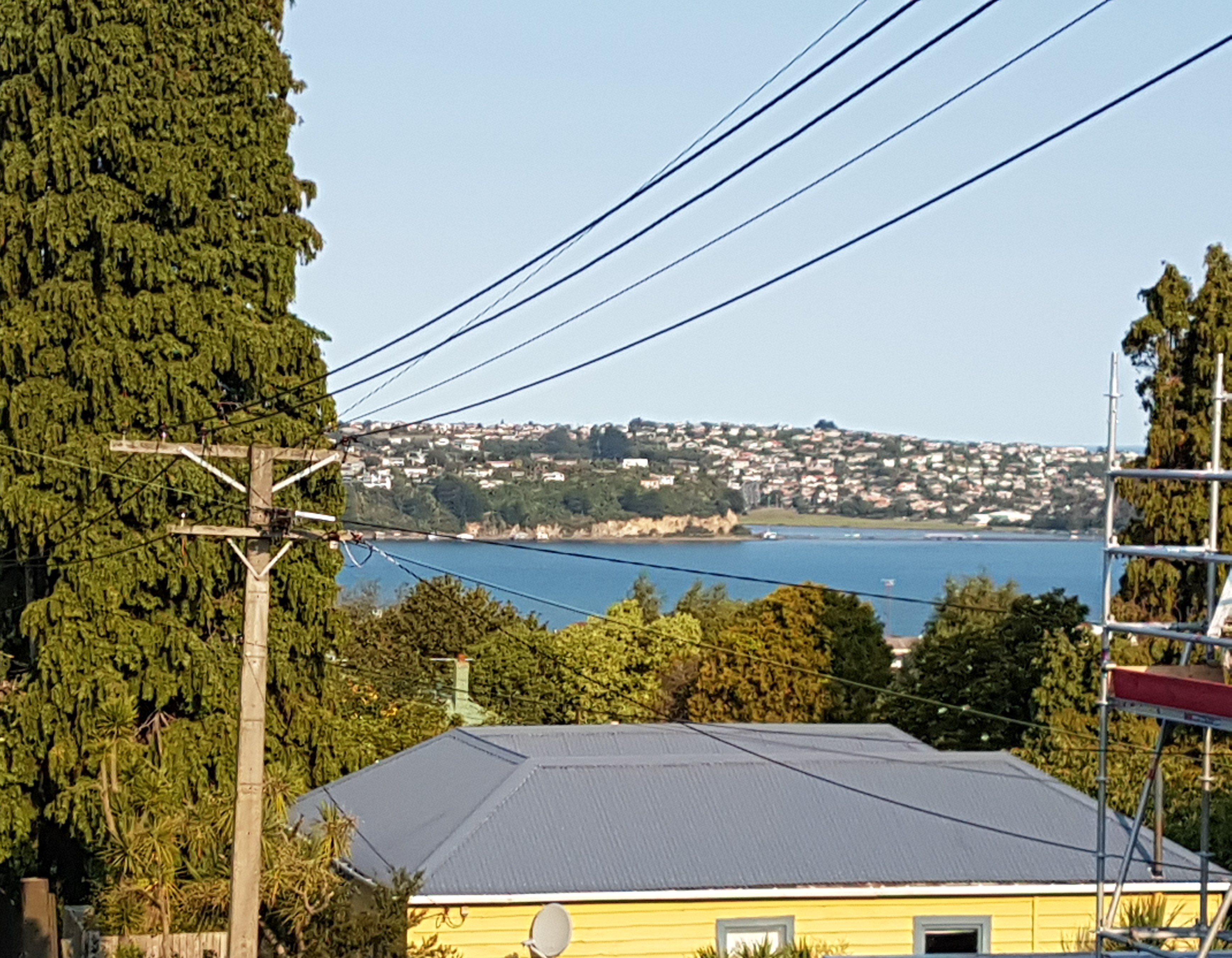
But during the walk, the views are amazing.
Dunedin and the Pacific OceanView across Dunedin Harbour
David has managed to fix the sound on their ‘very complicated – has everything – screen system’ so we are now listening to jazz, suitable for dancing to if I hadn’t walked 5 miles today!
It’s a sweet little house, owned by a young couple. The bed is comfortable; the carpet is very thick; there are small gardens front and back with very familiar plants.
Tomorrow (if I can move), I will stick to the ‘longer but flatter’ route. If not, I will take the bus!
Last week started badly. We were booked into a hostel, the only place we could find. We were rescued by Sandy, Jenny’s academic host, and ignominiously taken back to their place, where we have spent the last week. It’s very comfortable but we have displaced their five-year-old son from his bedroom again; he is currently occupying a bunk bed in his older sister’s room.
There has been a lot of ukulele-playing, ballet, chess, jigsaw puzzle, carpentry, running around outside, and cuddles. They were just rehearsing a Maori haka using batons, which has now morphed into a Queen concert rehearsal. They can be quite entertaining.
Despite ‘Hogwartz’
(the hostel), it was a good week. Jenny and I both went into the University
every day with Sandy. We both worked but me less intensively. I completed two
legal reports; went to an excellent exhibition of contemporary Chinese Art; and
started a Yoga / Pilates class with a great enrolment package of £20 for
unlimited sessions in the first month (we’re only in Dunedin for another
month). One Pilates class, one Yin yoga and a taxing bike ride yesterday later
and I feel much better.
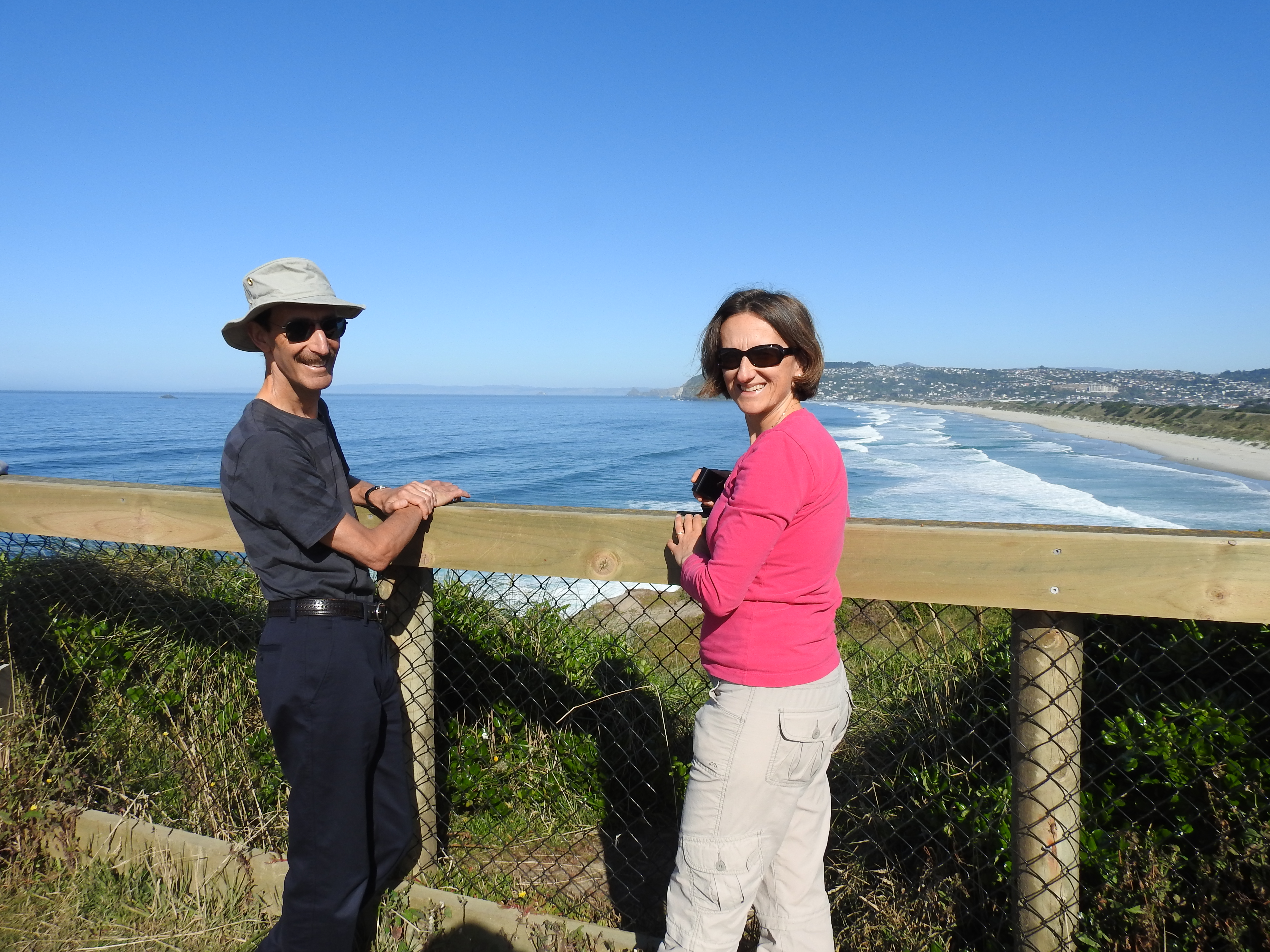
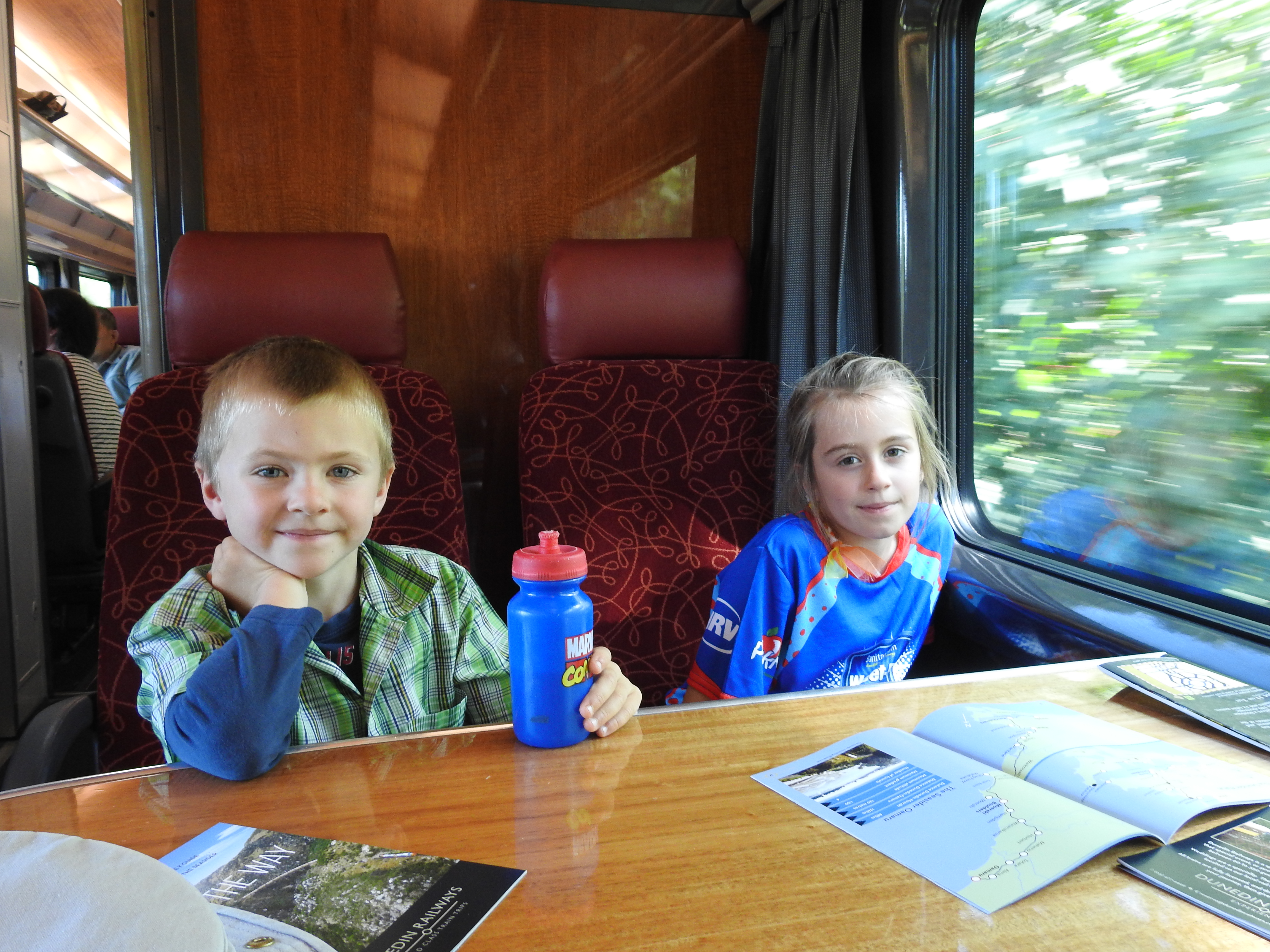
Jenny bought merino gloves last week, since when the weather has been wall-to-wall sunshine, no wind and no rain, 20 deg. Today, we’ve been to see the beach; taken the children on a scenic train journey;and are moving tomorrow into a house we now have for a month. Transport may be an issue. Report from the new house soon.
David and Sandy overlooking St Kilda beach, DunedinOliver & Adriana on the Seaside Railway
Found only two kosher items in the supermarket: (1) kashering salt (why??!!) and (2) vegan biltong which looks like coloured plastic. If it tastes similar I won’t bring any home.
Locks turn the ‘wrong’ way! To lock a door, you turn the knob or key away from the door frame. To unlock it, you turn it towards the door frame. The only exceptions we’ve found so far have been at Sandy and Philip’s house – but she is from Croatia and he is from Canada. Maybe it’s a northern/ southern hemisphere thing?




 Jenny & David's trip to New Zealand