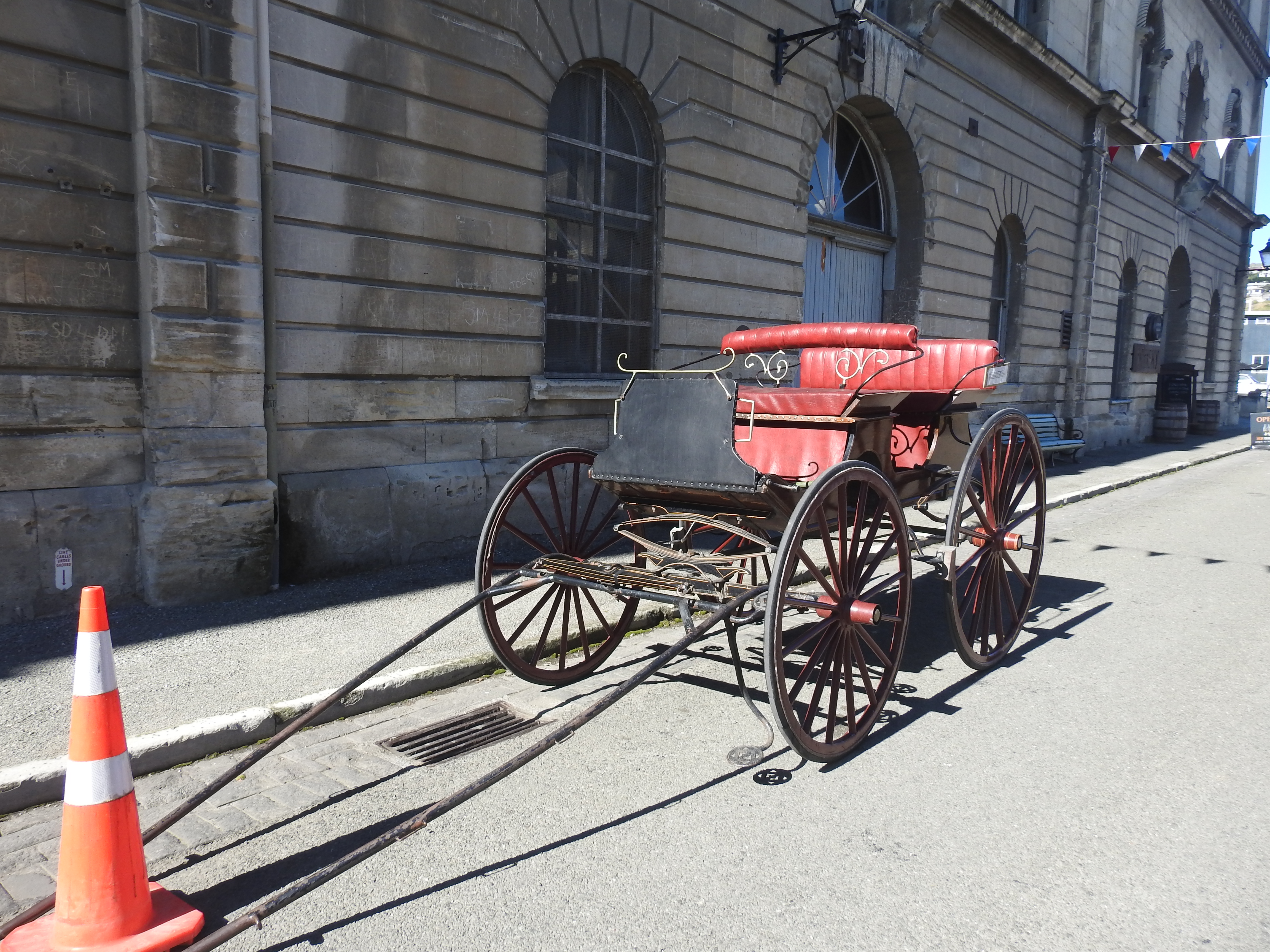
My last day at work was Friday 5th April. We invited some friends we had made in Dunedin to tea at our place on the Saturday afternoon. Sunday 7th, we left Dunedin to drive to Tekapo. En route, we went to Oamaru, which reminded us of Brighton. It has a pedestrianised shopping street preserved from Victorian times.
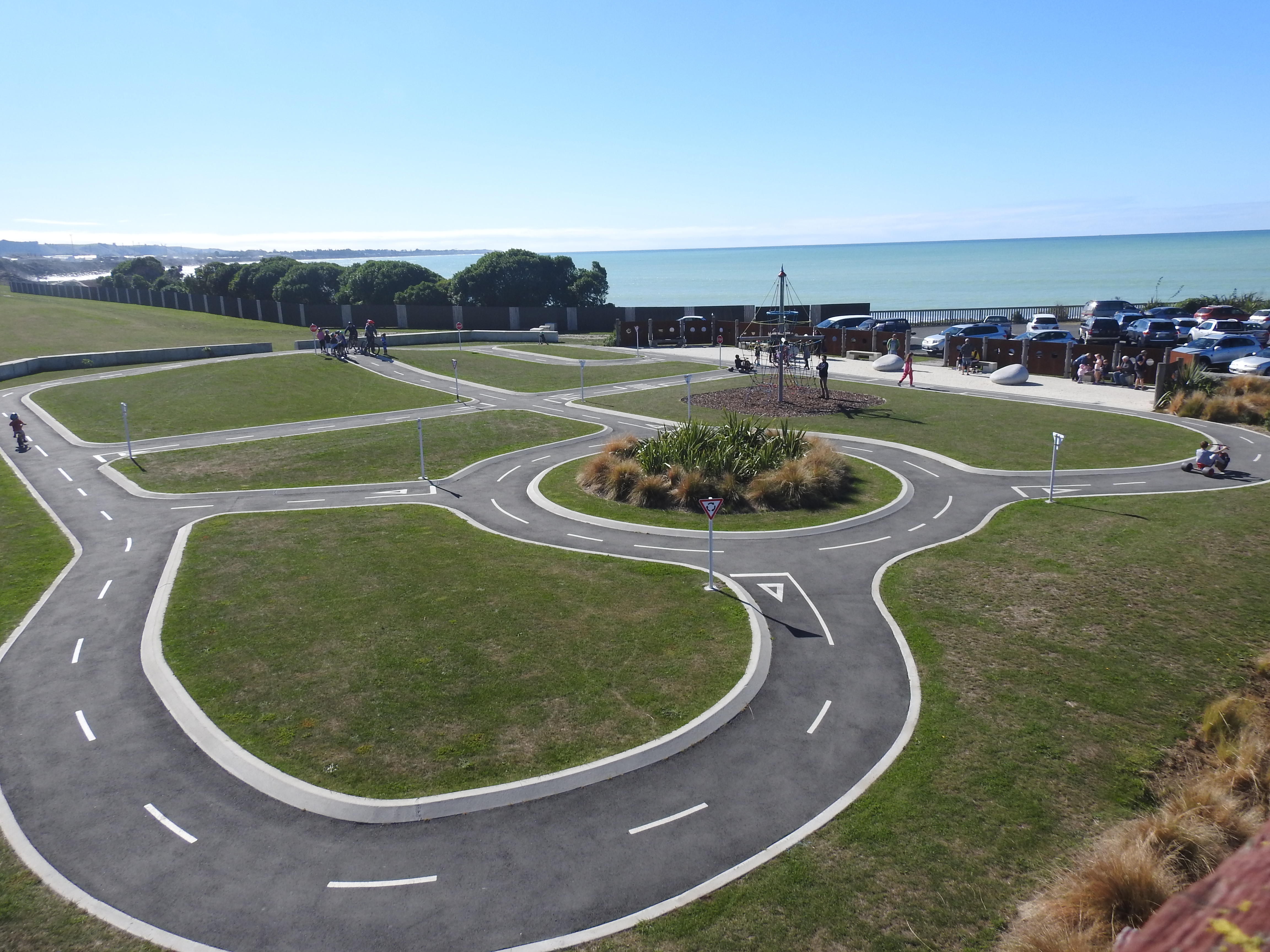
It also had a very clever children’s play street layout (playout?)
We went a slightly longer route through canyons of eroded sandstone, including seeing the Elephant Stones.

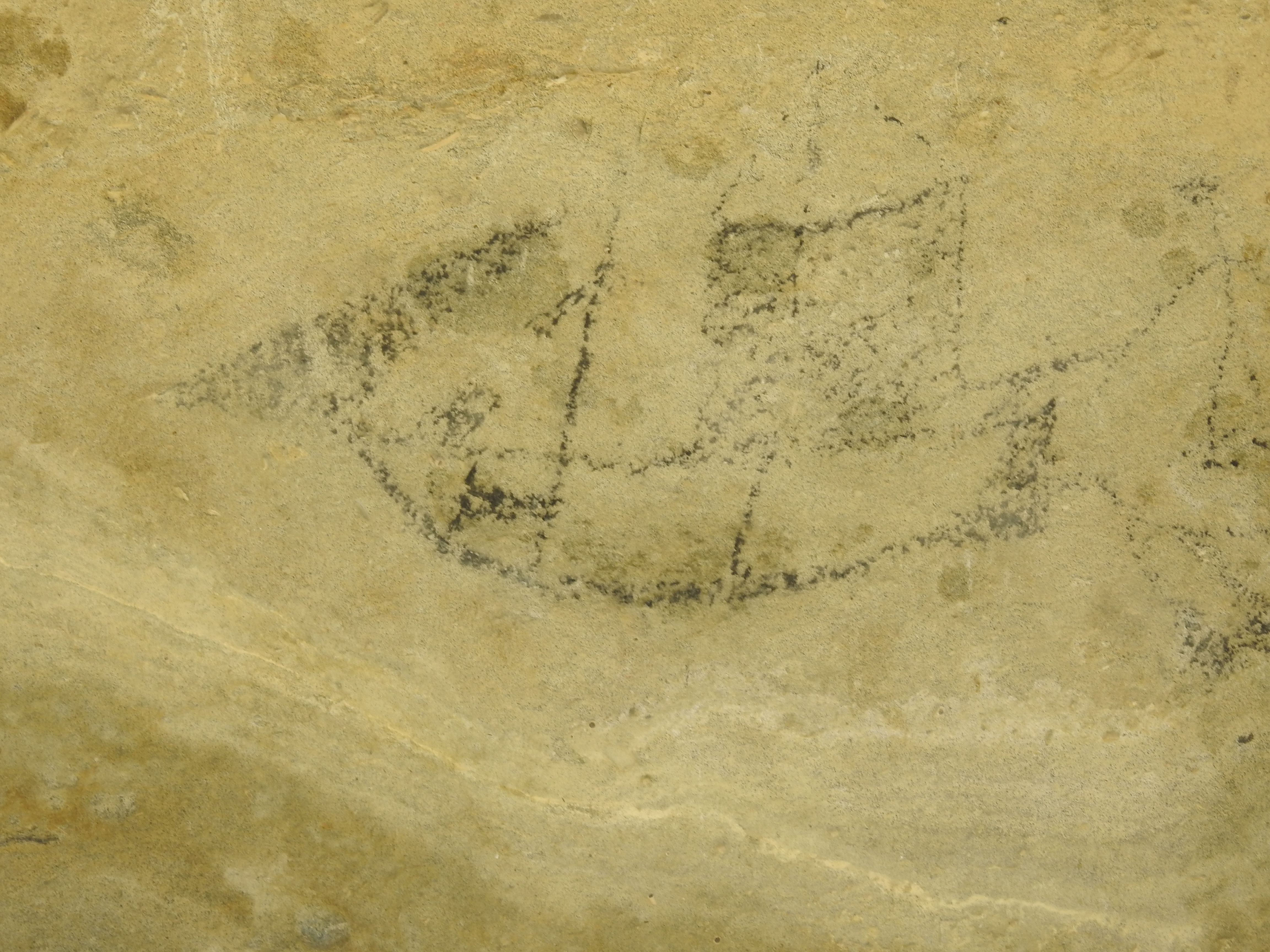
We also saw some Maori rock drawings.
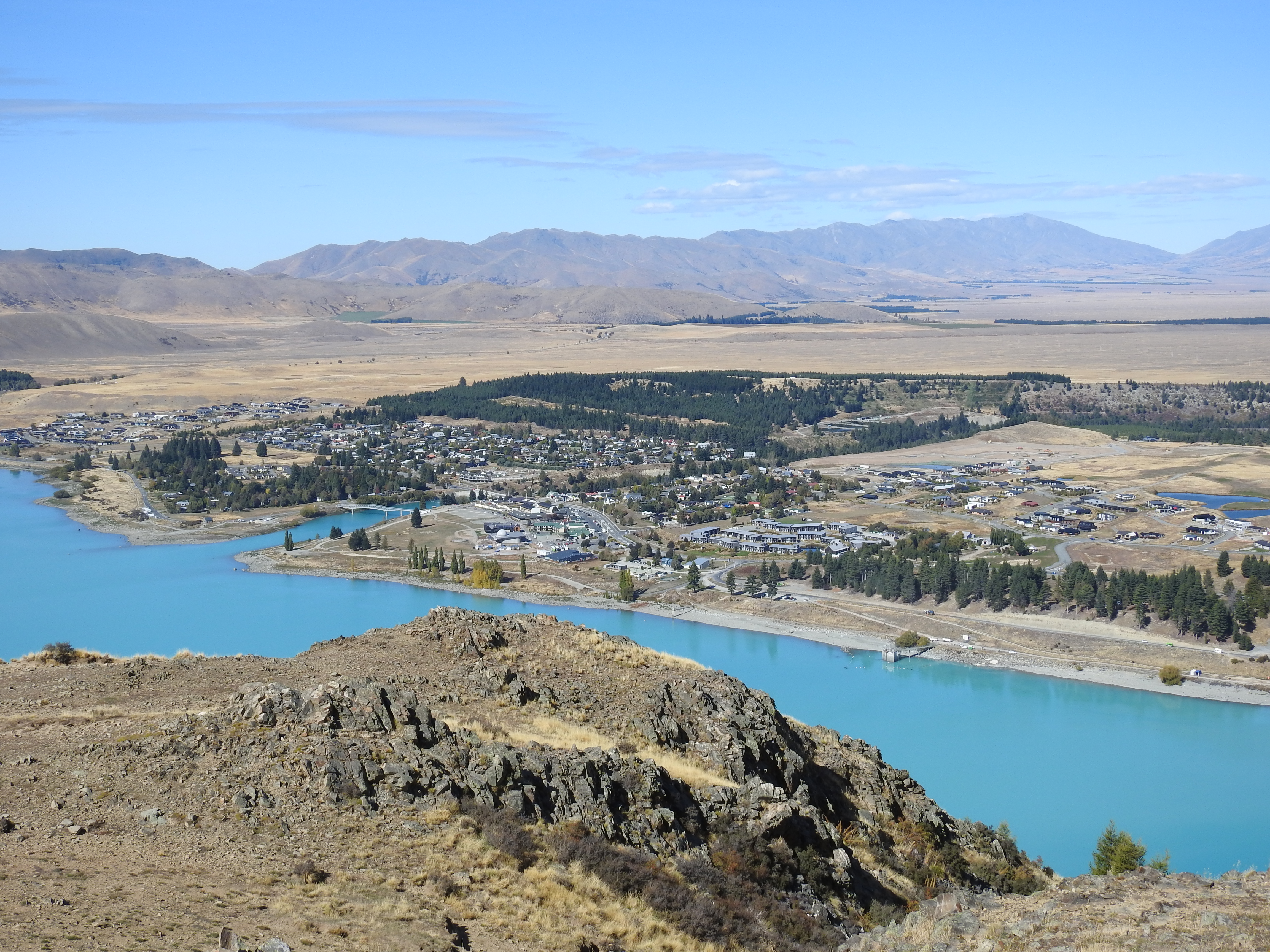
Tekapo is a village with 318 residents, according to the 2013 Census, plus tourists and holiday home weekenders.
On the Monday, we backtracked to visit the Aoraki Mt Cook reserve and went to the Visitor centre and also the Edmund Hillary Alpine Centre. We walked along the trail to Kea Point, from where we could see the upper end of Mueller Lake, then along the first part of the Hooker trail to the Hooker Lake and River.
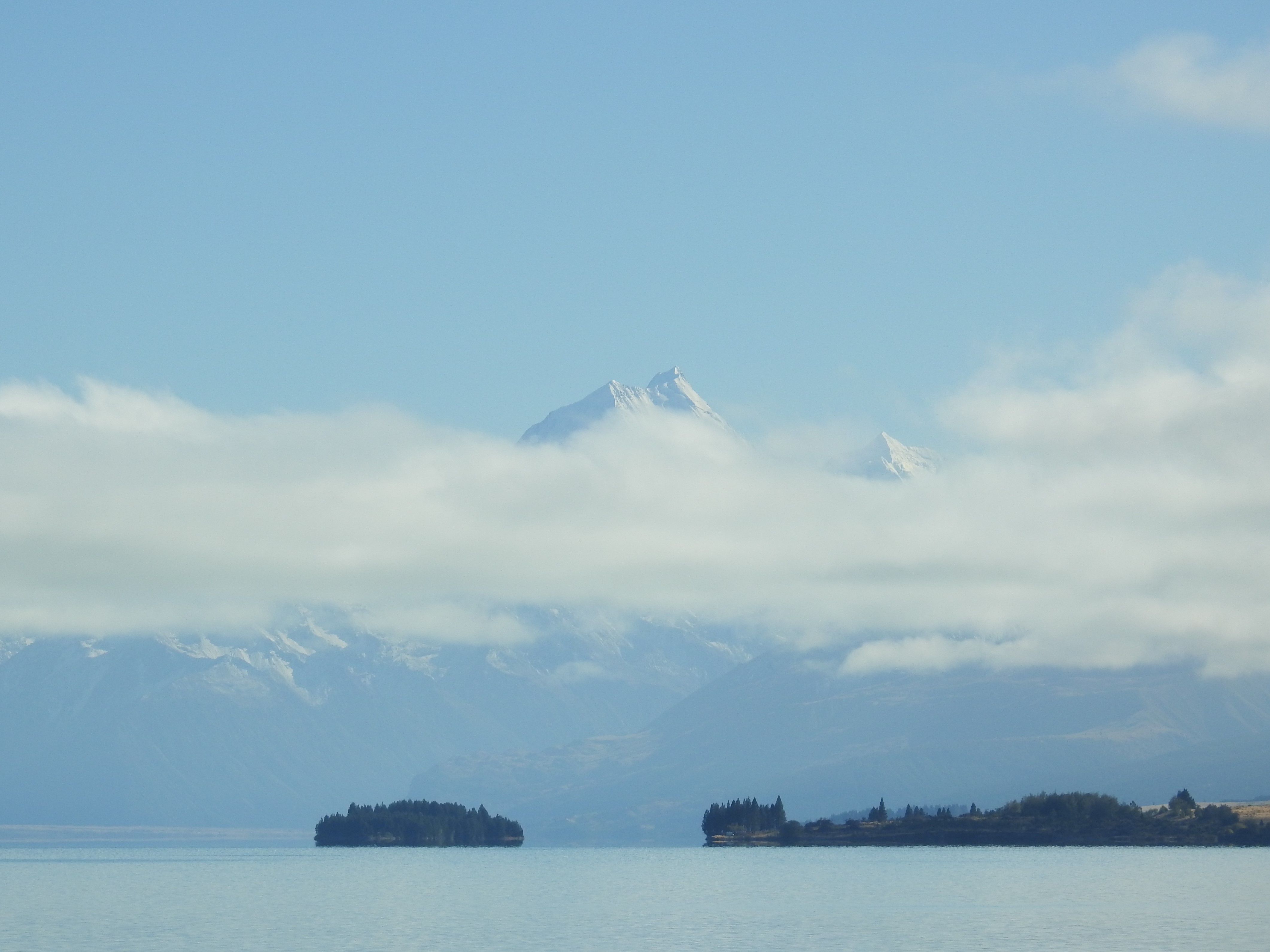
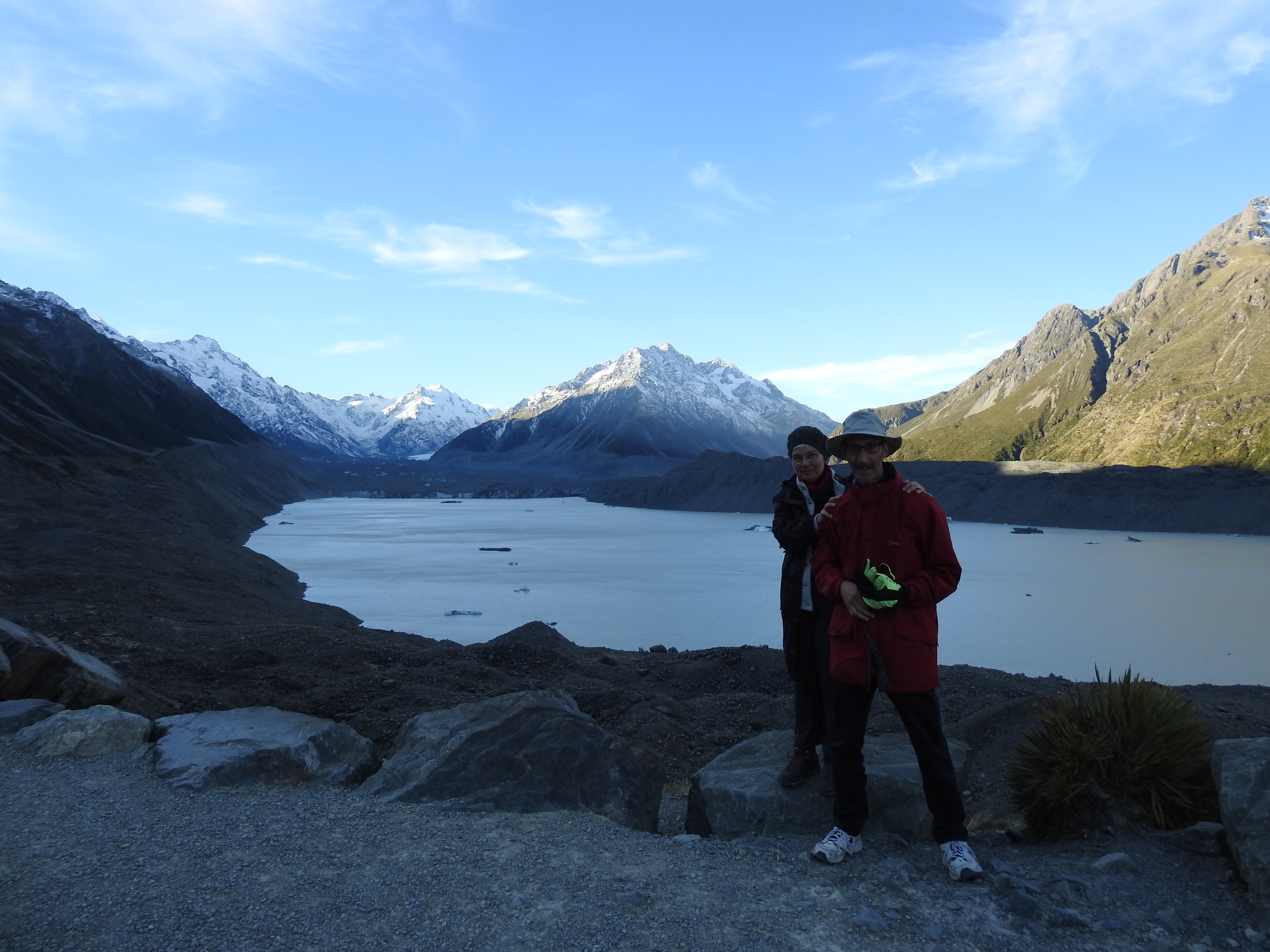
We then drove to the Tasman Valley and climbed up a trail to see the Tasman Glacier (sadly now much diminished in length and depth) and Lake Tasman.
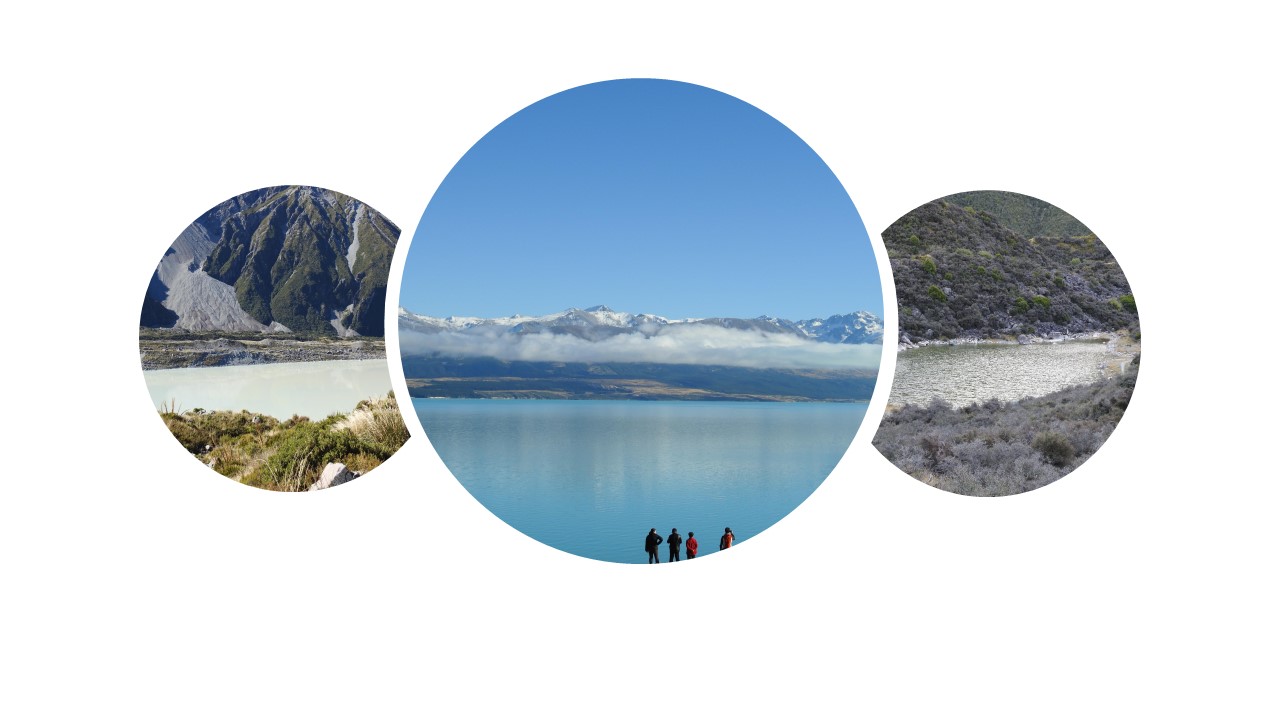
Lakes created by glacial meltwater contain ‘glacial flour’, the result of the glacial action grinding the rocks very finely. Close to the glacier, the water appears a muddy grey because it contains so much glacial flour (e.g. Lake Mueller). Lakes Pukake and Tekapo are a brilliant turquoise blue because most of the glacial flour has settled but the flour still suspended in the water makes it appear turquoise. The Blue Lakes are now green because they are no longer fed by glaciers but by rainwater, which allows algae to grow
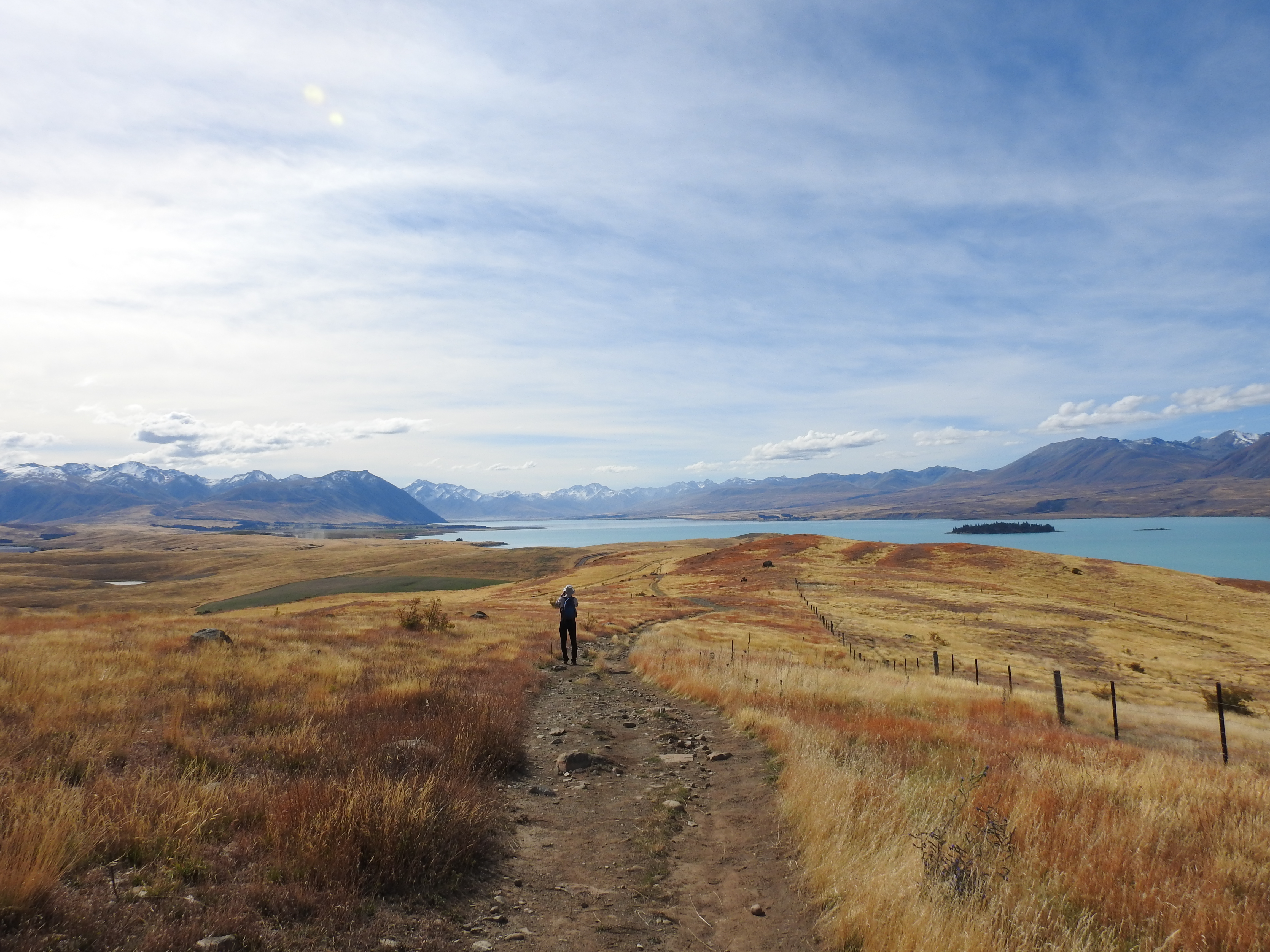
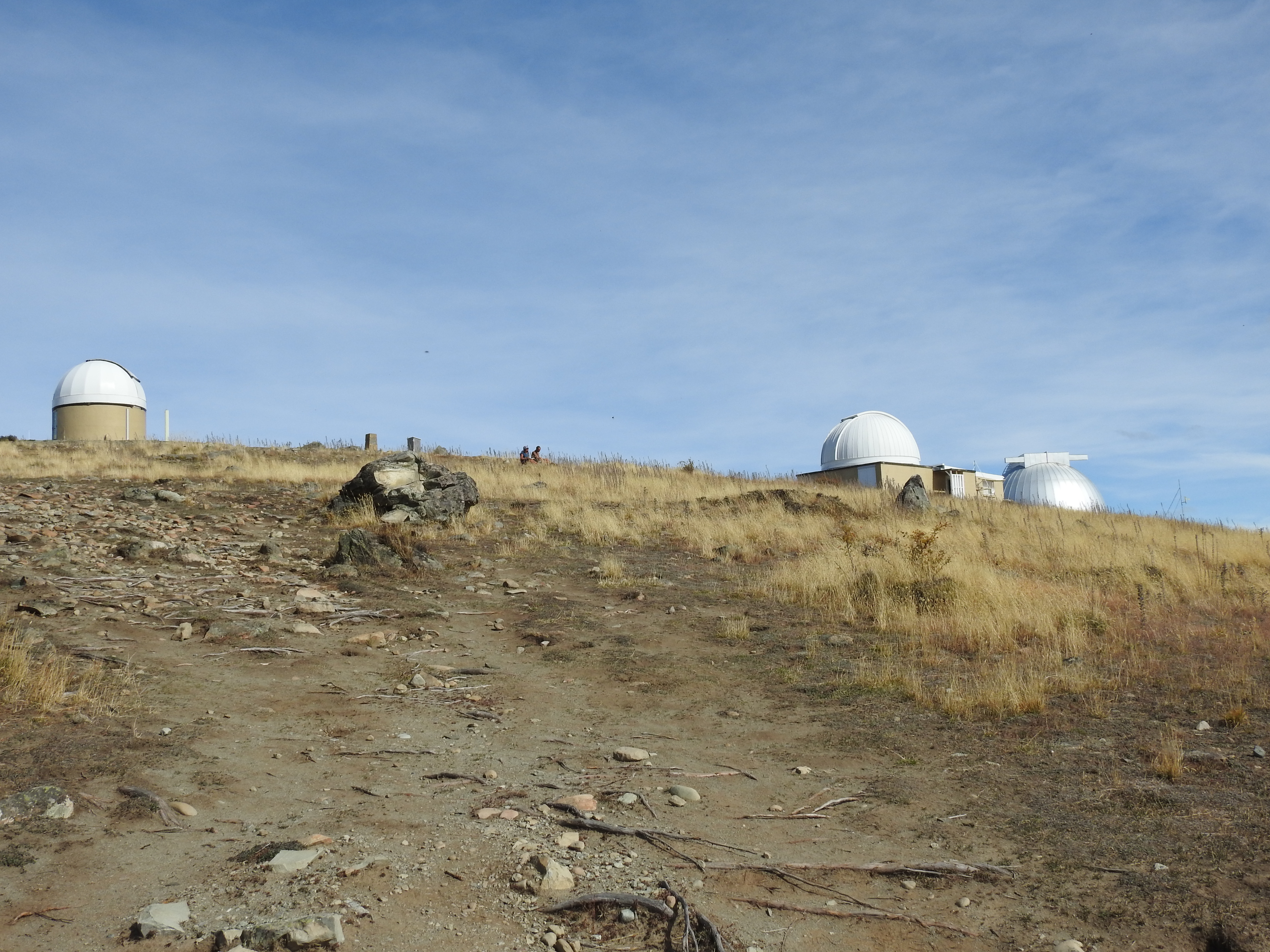
Tuesday was spent walking up Mt John then back down along Lake Tekapo.
We had visited the Mt John Observatory on the Sunday evening, which luckily had 0% cloud cover and an almost new moon, so visibility was perfect. The whole area is a ‘dark sky reserve’ so even the street lights in Tekapo are yellow and shielded to give light only downwards. We learnt how to find the South Celestial Pole using ‘the pointers’ (alpha and beta Centauri) and the Southern Cross, or Crux; saw Jupiter and four of its moons; saw the Omega Centauri cluster of a billion stars orbiting a black hole; saw Jupiter’s Ghost through one of the main telescopes; and had a group photo with the Milky Way as the backdrop.
We had intended spending Wednesday on a bike ride but as rain was forecast and Akaroa sounded so interesting, we decided to leave Tekapo a day early and have an extra 24 hours in Akaroa….

 Jenny & David's trip to New Zealand